Background
The Lifts and Escalators Ordinance requires the responsible persons (RPs) for lifts/escalators to keep a log-book to record the works details in relation to their lifts/escalators. Since 1987, the log-book has always been in paper format. With the rapid technological development in recent years, members of the public and the trade are getting more used to handling daily matters with digital tools. Meanwhile, digital technologies such as cloud and blockchain technologies are becoming more popular. To make good use of the digital technologies to benefit the public and the trade, the Electrical and Mechanical Services Department (EMSD) rolled out the Digital Log-books System for Lifts and Escalators with blockchain technology to replace the log-books in paper format on 30 November 2022.
Features of Digital Log-books
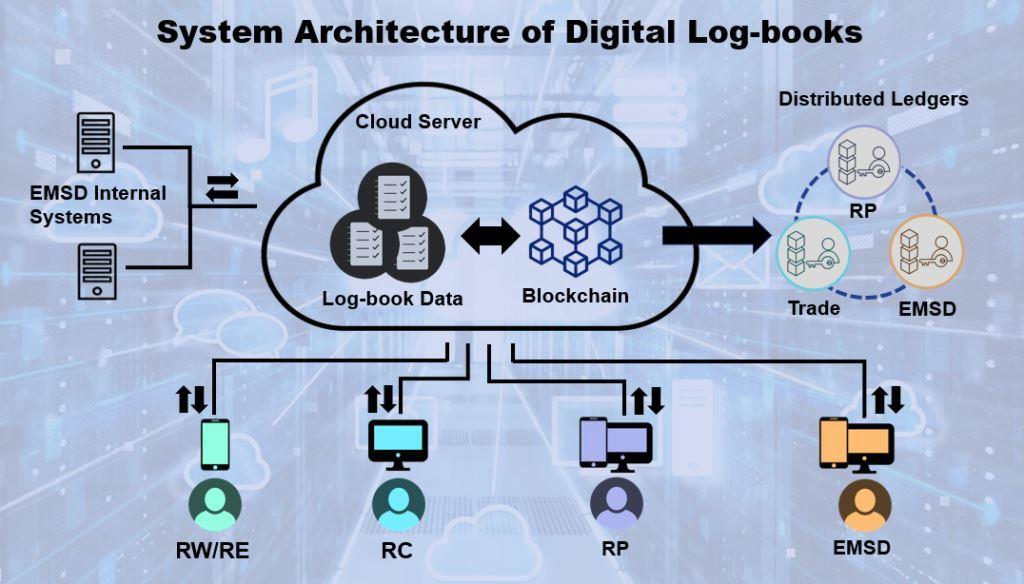
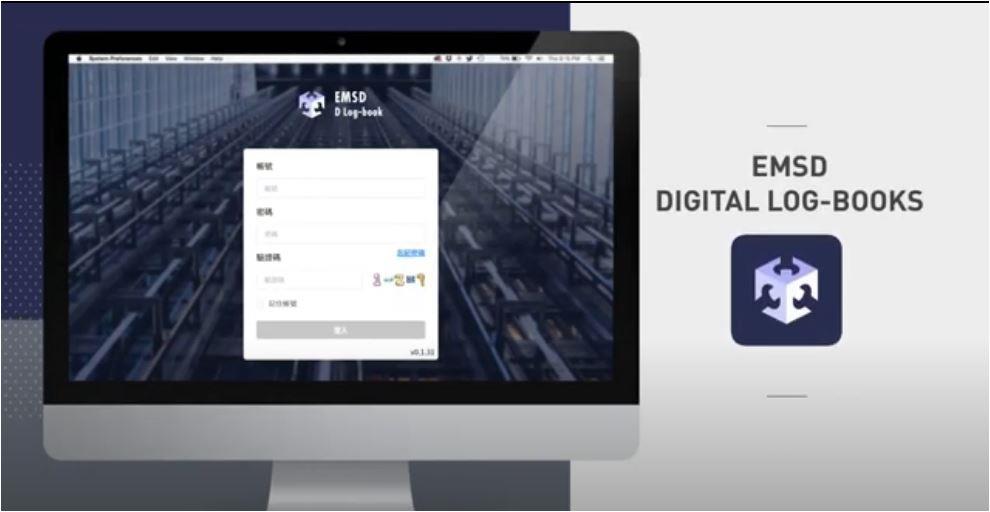
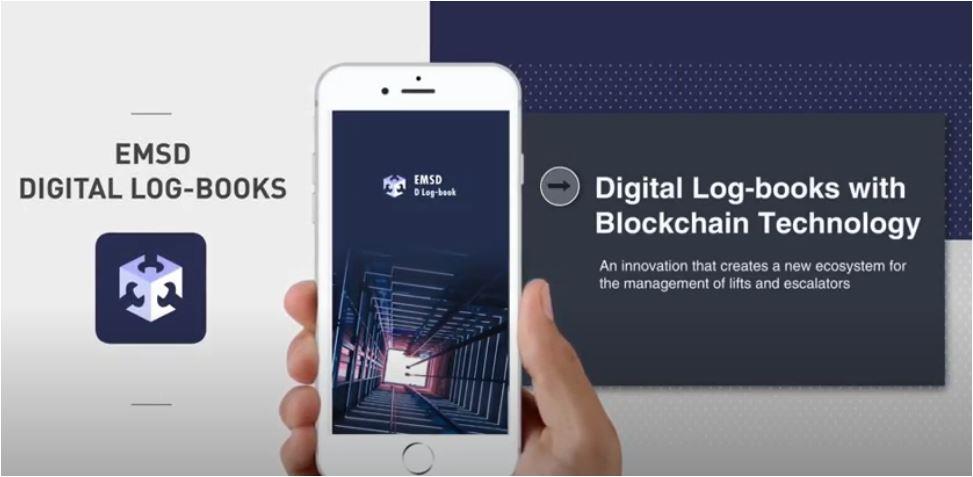
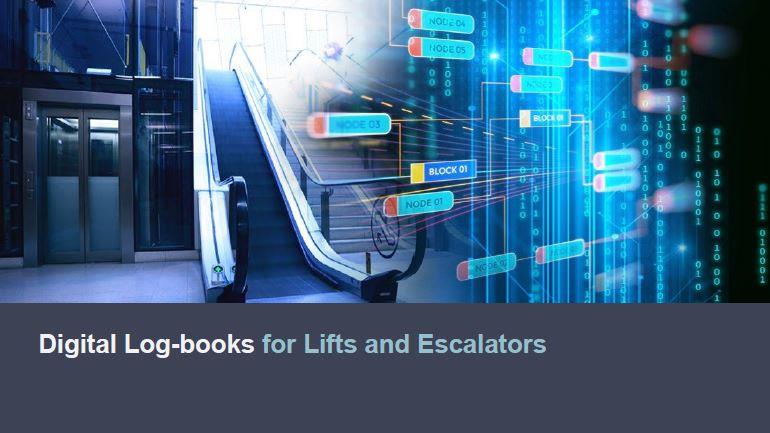
Through the mobile app of the Digital Log-books system, lift/escalator workers could upload the works details for lifts/escalators to the cloud system with ease. The EMSD, responsible persons ("RPs") and registered lift/escalator contractors ("RCs") could download and view the previous and latest works record of the lifts/escalators anytime and anywhere through the mobile app or web portal of the system. Blockchain technology would be applied for storage of the log-book records, rendering the records tamper-resistant and ensuring the authenticity of the log-book content.
The system could also carry out data analysis on collected information to help various stakeholders better understand the performance and condition of the lifts/escalators. It would facilitate joint monitoring, smart regulation and effective collaborations, thereby enhancing the efficiency of management of lifts/escalators and the reliability of lift/escalator services.
Promotional Video of Digital Log-books
(Cantonese V/O with Traditional Chinese and English subtitles)
(Available in Traditional Chinese Only)
Benefits of Digital Log-books
-
Responsible Persons (RPs)
The Digital Log-books could help RPs follow up the works on lifts/escalators and analyze the condition of the lifts/escalators, enabling them to provide better facility management services.
-
Registered Lift/Escalator Contractors (RCs)
The Digital Log-books could help RCs check the workers’ performance in carrying out lift/escalator works, understand the time required for repair and maintenance works, enabling them to further optimize the work schedule for better allocation of manpower and resources.
-
Registered Lift/Escalator Engineers and Workers (REs & RWs)
The Digital Log-books could help RWs obtain the necessary information for their works in real-time and submit works reports more efficiently.
-
EMSD
The Digital Log-books could help EMSD find out the characteristics of different lifts/escalators for a better understanding of the situation of the trade and in turn formulate appropriate work guidelines and policies to facilitate trade development.
Development of Digital Log-books
The system development work for the Digital Log-books commenced in mid-2021. At the early stage of development, the EMSD set up extensive consultation channels with the RPs and the trade to collect users’ requirements and feedbacks for enhancement of the system. Working groups with the Building Services Operation and Maintenance Executives Society (BSOMES), Housing Authority (HA), MTR Corporation (MTRC), the Lift and Escalator Contractors Association (LECA), the Registered Elevator & Escalator Contractors Association Ltd. (REECAL) and the Hong Kong General Union of Lift and Escalator Employees (HKGULEE) have been formed and multiple meetings with each of the working groups have been held. All working groups have expressed their support for the Digital Log-books system and have given very positive feedback on the system design.
To ensure the Digital Log-books system works well, before the system roll-out, the EMSD worked with the RPs and the trade to carry out system trial on over 3000 lifts and escalators, with the aim to continuously improve the system design. Trial participants were provided with user manuals, training programmes and hotline services for trouble-shooting and opinion collection.
Roll-out of Digital Log-books
The Digital Log-books system was officially launched on 30 November 2022, in a free-of-charge basis. The templates of the digital log-books have been specified to be the form suitable for recording information and particulars of lifts/escalators. Adoption of digital log-books for recording relevant information of a lift/escalator will be regarded as an alternative way for the RP to comply with the statutory requirements of keeping a log-book for the lift/escalator. Any RPs interested in adopting digital log-books can contact their appointed registered lift/escalator contractor to arrange for activation of the digital log-books designated for their lifts/escalators. The RP can then create an account for access to the information of lifts/escalators (i.e. basic particulars, information of lifts/escalators works, details of equipment breakdown, incidents, etc.) with their given location identities via a mobile device or computer ubiquitously.
New Functions of Digital Log-books
Since roll-out of the Digital Log-books, the EMSD has added new functions to the system progressively to facilitate users’ management of lifts and escalators:
-
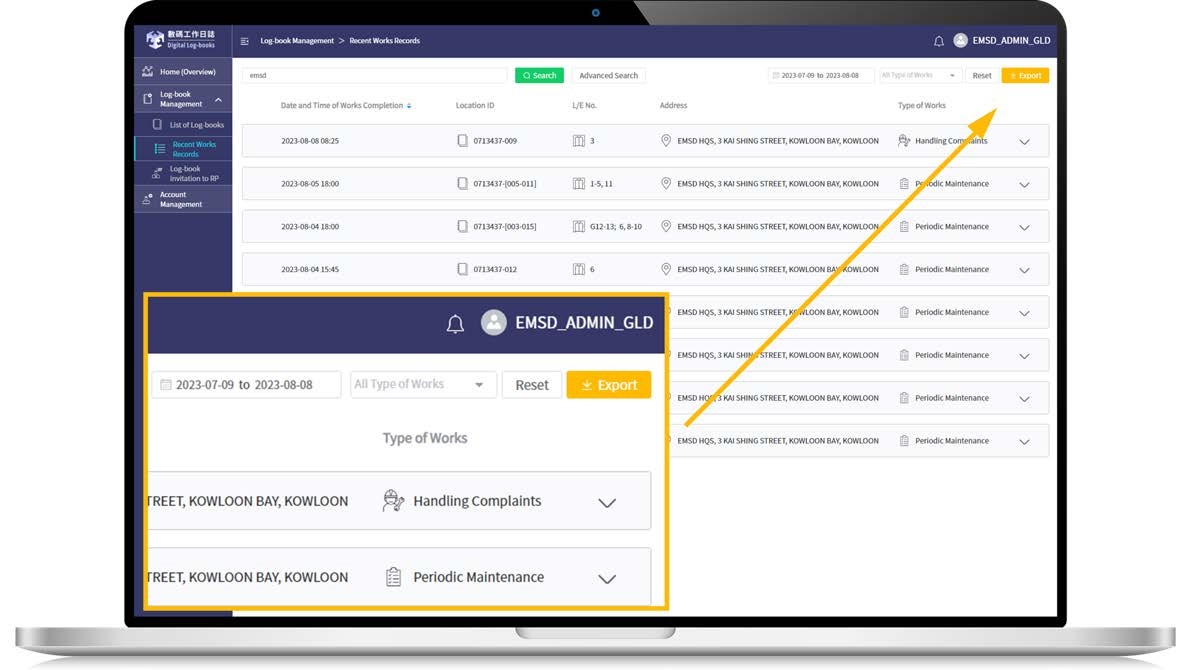
Export log-book records
An “export” function has been added to the web portal of the Digital Log-books. Using the function, RPs and RCs can export log-book records to Microsoft Excel, which facilitates further analysis of the log-book data for better facility management.
-
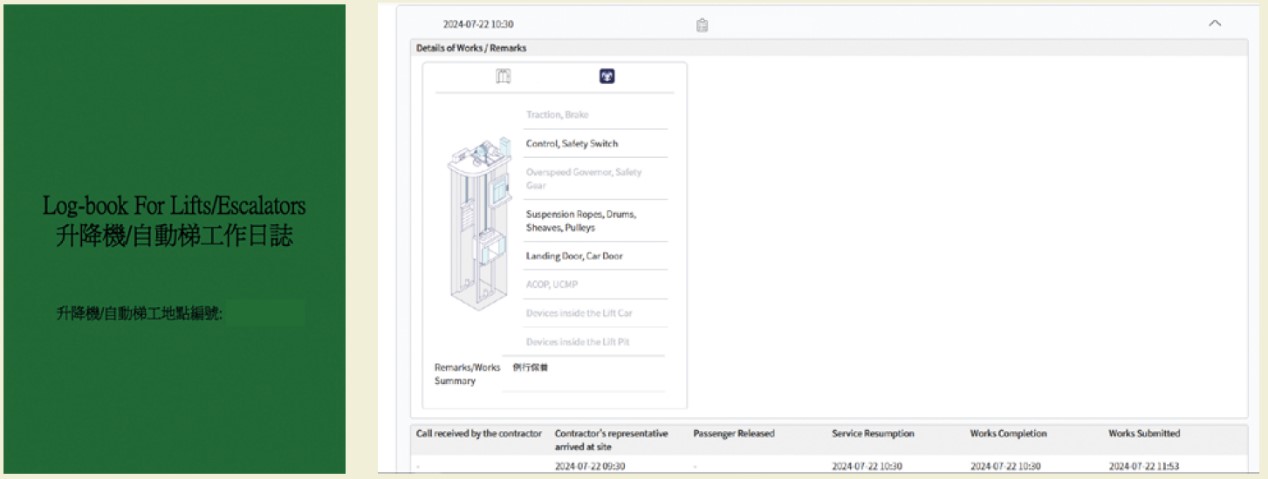
Export Log-books (Printable Version)
The “Export Log-books (Printable Version)” function has been added to the web portal of the Digital Log-books. Using the function, RPs and RCs can export log-book records in PDF format, which can be printed for RPs who do not have an account of the Digital Log-books for reading.
-
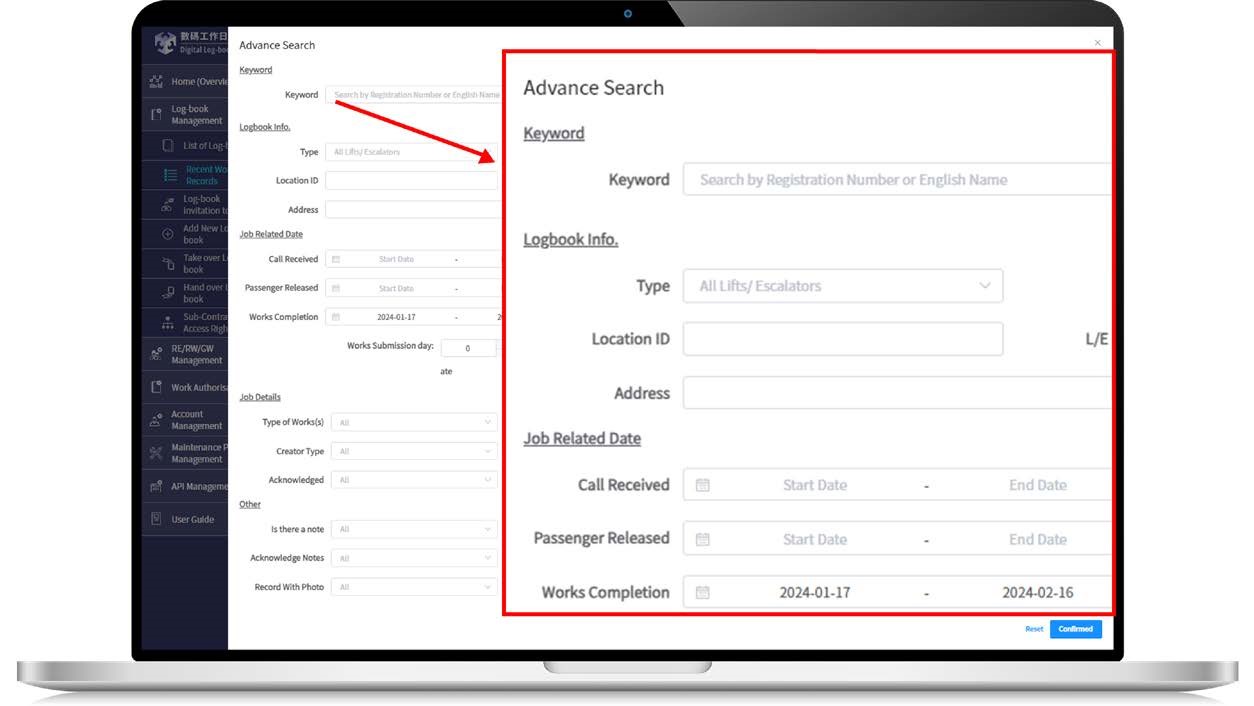
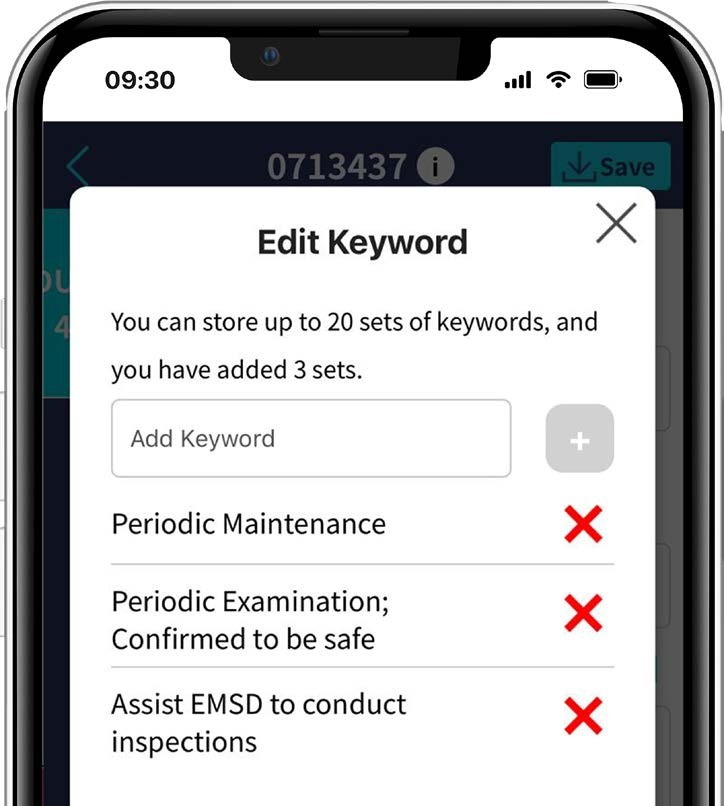
Advanced Search
An “Advanced Search” function has been added to the web portal of the Digital Log-books. Using this function, RPs and RCs can filter the search results by selecting multiple criteria, including time and location of the works, type of works, name of contractor etc., so as to gain quick access to works requiring attention and its details for better facility management.
-
Application Programming Interface (API)
Many property management companies and RCs have computer systems to store and analyse lift/escalator data. An “Application Programming Interface (API)” function has been added to the web portal of the Digital Log-books. It facilitates information exchange between users’ own computer systems and the Digital Log-books by automatically transferring technical specifications and works data on the Digital Log-books to users’ computer systems for further analysis.
-
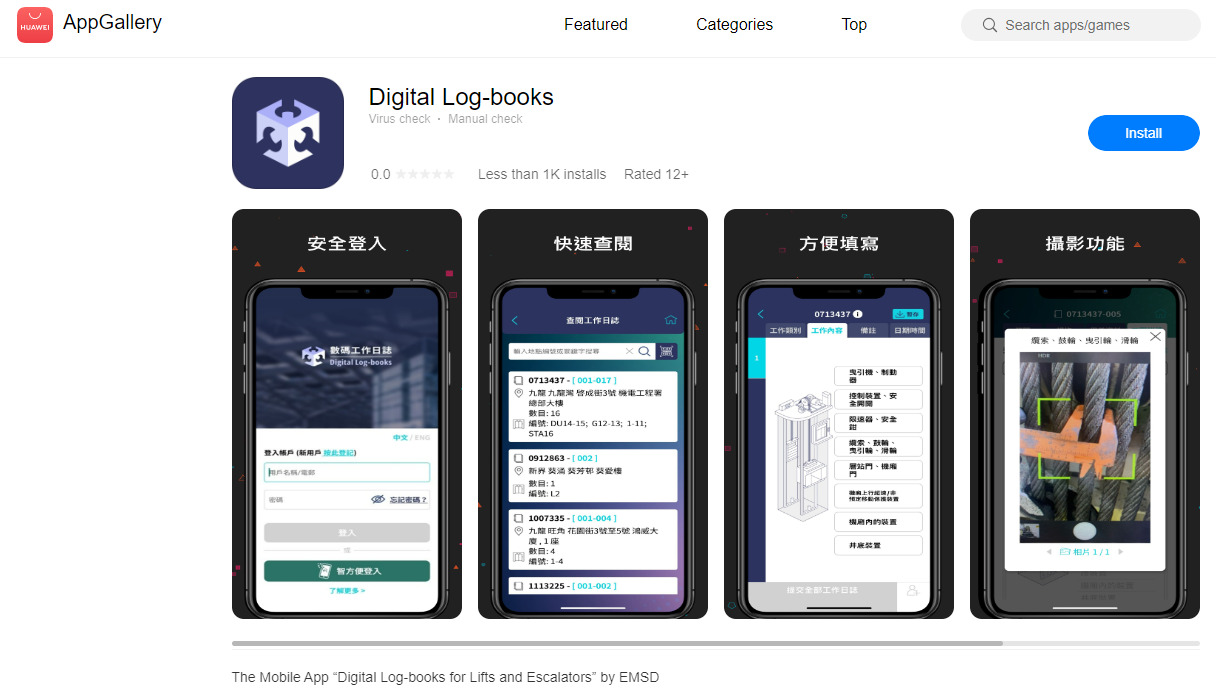
HarmonyOS-compatible version of mobile app
he EMSD has released a HarmonyOS-compatible version of the mobile app of Digital Log-books. Users of the Digital Log-books using devices running on HarmonyOS can download the mobile app of Digital Log-books from Huawei AppGallery for use.
-
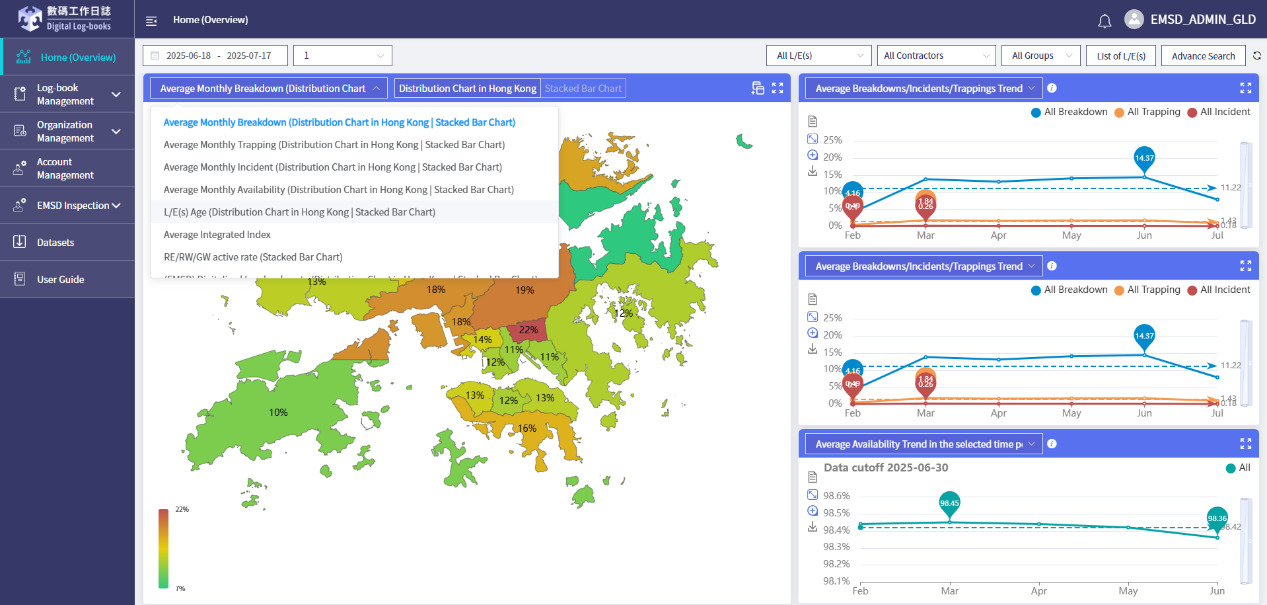
Enhanced Dashboard
The dashboard of the Digital Log-books web portal has been enhanced to allow users to customize the type and time period of data displayed on the graphs, making it more convenient for users to monitor the condition of lifts and escalators.
-
E-submission of Statutory Forms
Statutory forms such as LE2, LE3, LE10 and LE27 can now be submitted by registered lift/escalator contractors via the web portal of the Digital Log-books, helping users to submit the statutory forms timely and conveniently.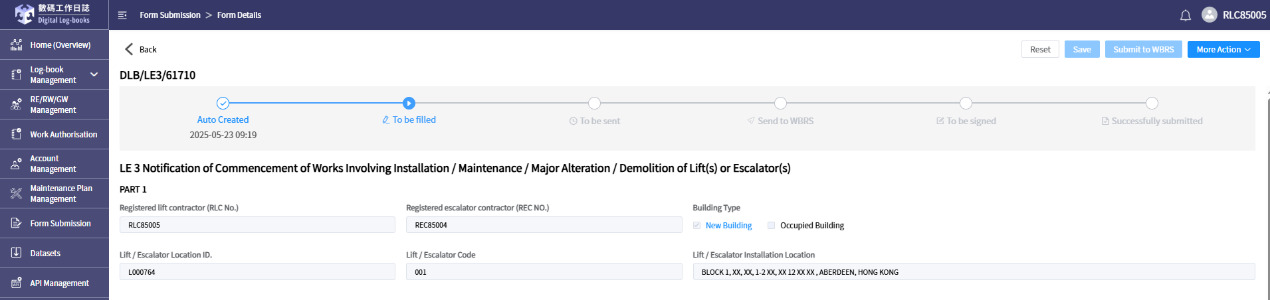
-
Lift and Escalator Condition Analysis System (LECAS)
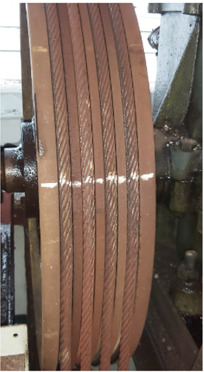
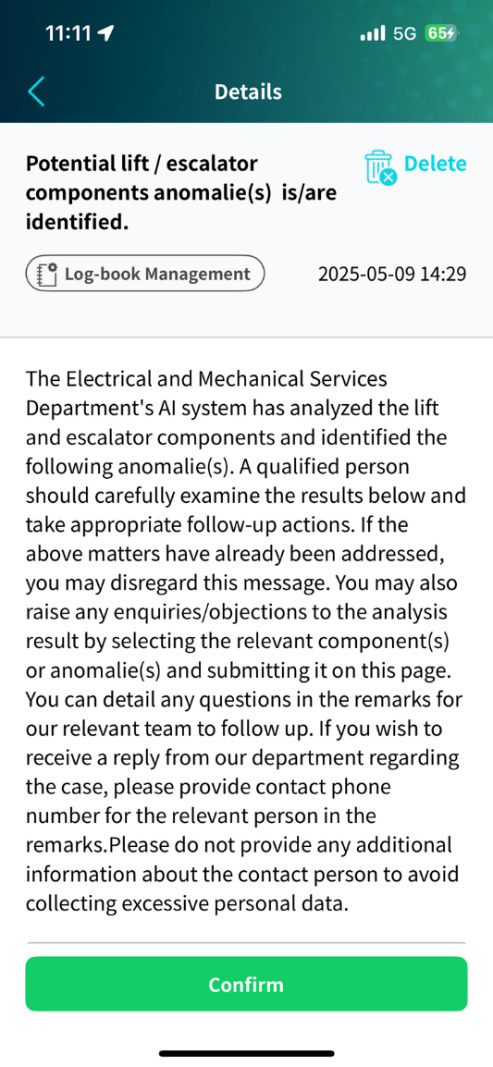
The Lift and Escalator Condition Analysis System (LECAS) applies artificial intelligence to analyze the condition of lift and escalator components captured in the photos uploaded to the Digital Log-books by RP/RE/RW. If potential anomalies are found, the Digital Log-books system would issue smart notifications to the user who uploaded the photos to facilitate timely checking and repair.
-
Integrated Index for Lifts and Escalators
The Digital Log-books has introduced a new "Integrated Index for Lifts and Escalators" scoring mechanism. This index integrates various parameters related to the operational performance of lifts/escalators (such as breakdown rate and trapping rate) as well as data related to the performance of trade practitioners and responsible persons (such as the number of on-time job submissions). It aims to analyze and compare the overall performance of lifts/escalators, thereby assisting responsible persons, the trade, and the EMSD to more effectively monitor the operation and management levels of lifts/escalators.
_202511.jpg "New Functions of DLB (Eng)_202511")
User Guide Manuals
-
Quick Start Manual for All Users
-
User Manual for RPs
-
User Manual for RCs
-
User Manual for REs & RWs
Presentation for Introduction of Digital Log-books
Publicity Materials
-
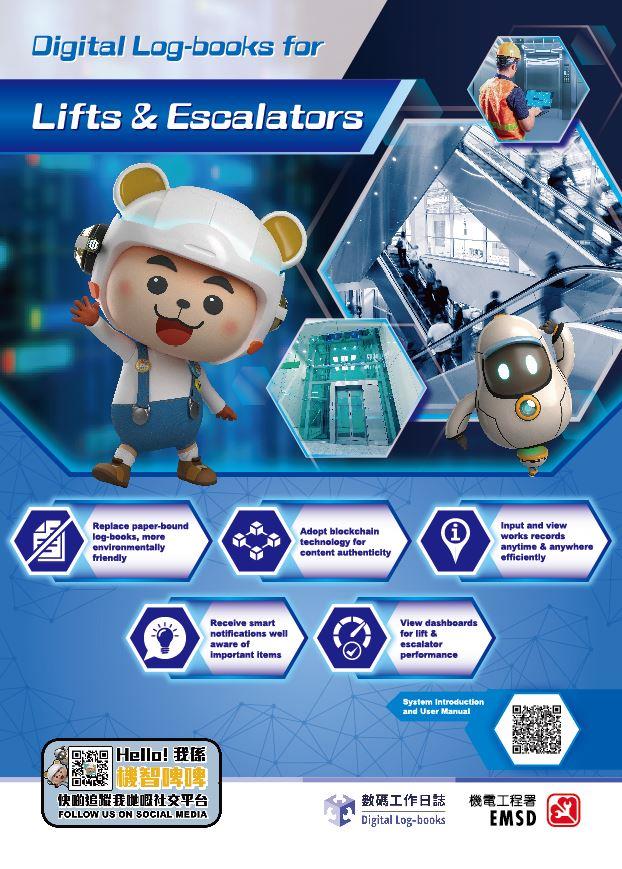
Digital Log-books for Lifts & Escalators
- Replace paper-bound log-books, more environmentally friendly
- Adopt blockchain Technology for content authenticity
- Input and view works records anytime & anywhere efficiently
- Receive smart notifications well aware of important items
- View dashboards for lift & escalator performance
Enquiry
-
Hotline
Office hour: Monday to Friday, 9am-6pm (Public Holiday not included)
- IT Support Issue - (852) 3741 8880
- Operational Issue - (852) 9761 6685
-
Email
For any suggestions and comments:
Digital Log-books System for Lifts and Escalators







 Digital Log-books System for Lifts and Escalators