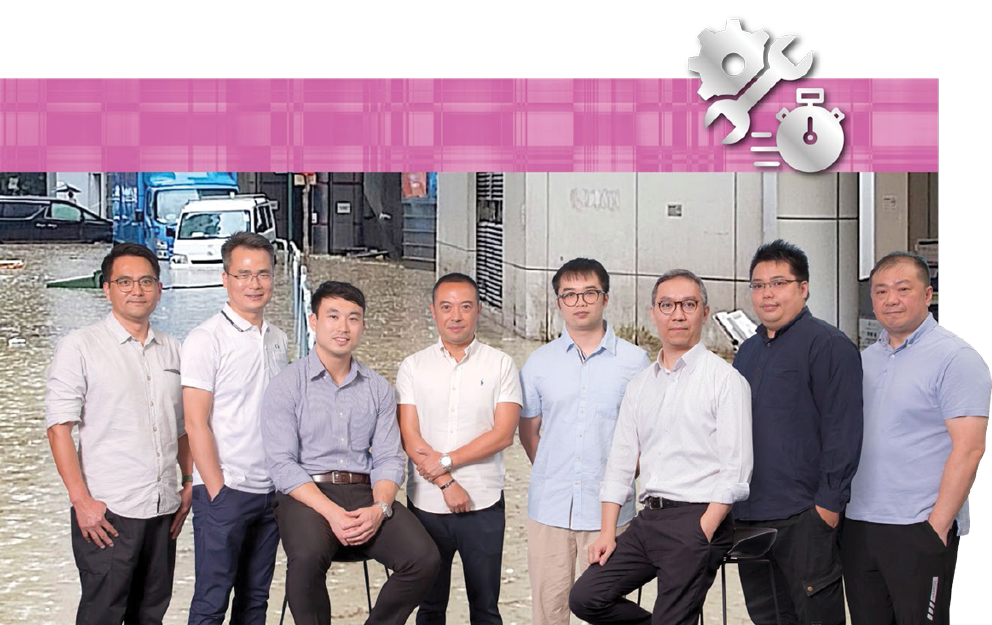
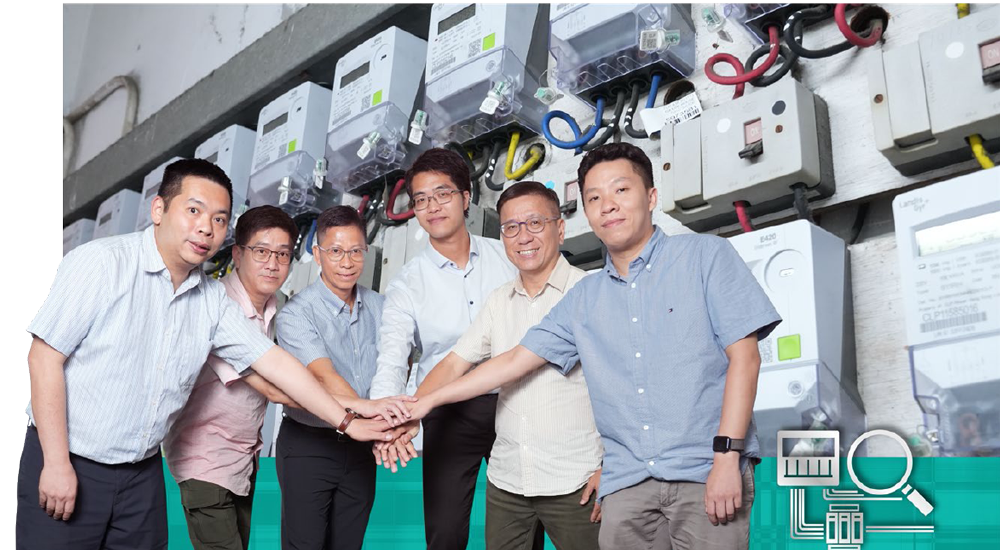
Hong Kong was struck by a once-in-a-century rainstorm in early September 2023, which caused severe flooding in various districts and damages of numerous public facilities. Mr Lau Kai-chung, a senior engineer of the Municipal Sector Division (3rd right), led his team to proactively provide emergency supporting services for our clients and the public. Mr Chang Ah-hing, a Work Supervisor I (1st right), who has been working in the division for 18 years, was one of the team members who braved the rainstorm.
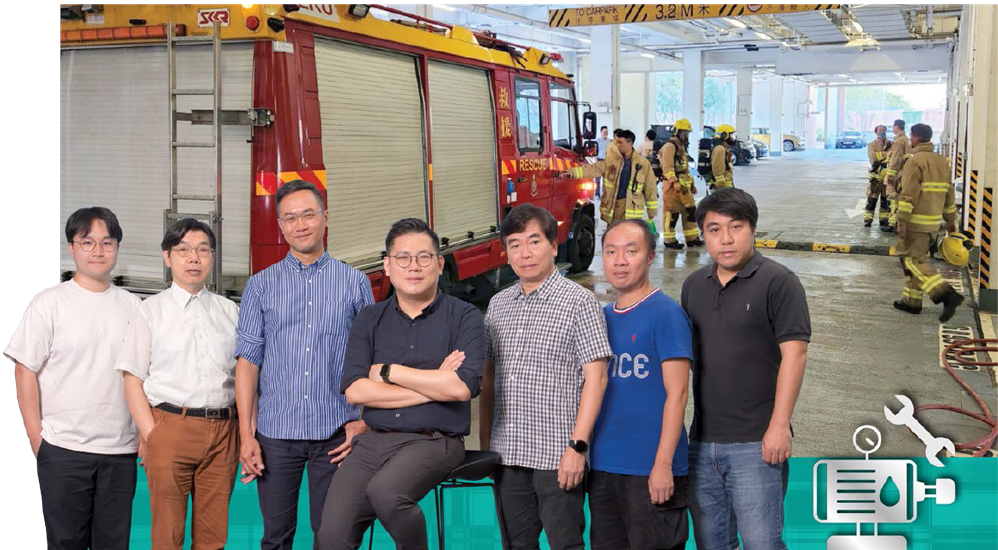
Mr Chio Yung-an (centre) and his team had never imagined that they would spend the Winter Solstice Festival and Christmas in the plant room of the New Territories Fire Services Communications Centre to monitor and control to ensure the uninterrupted operation of its air-conditioning system. Yet with their can-do spirit, they dedicated fully to their work and accomplished the unusual mission. He shares the experience and insights gained from the incident.
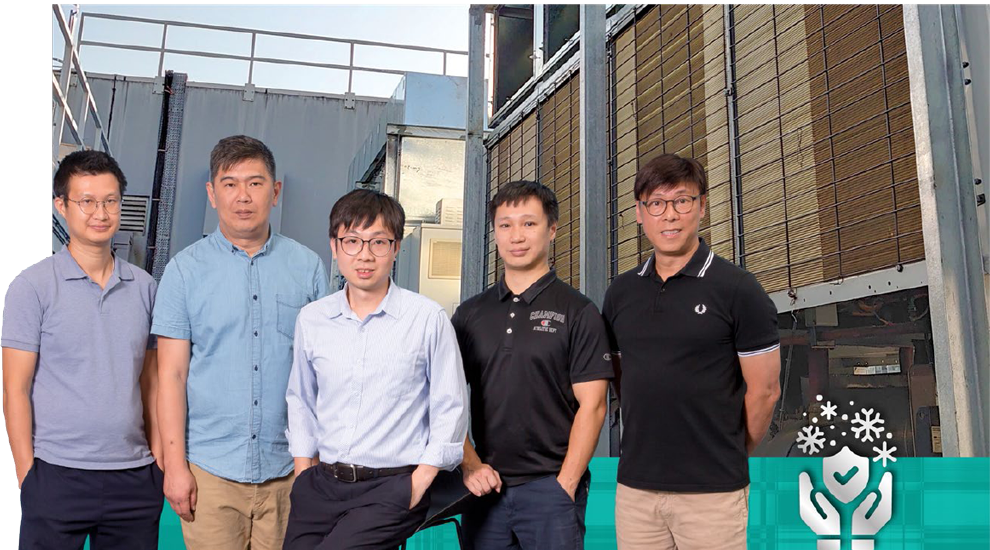
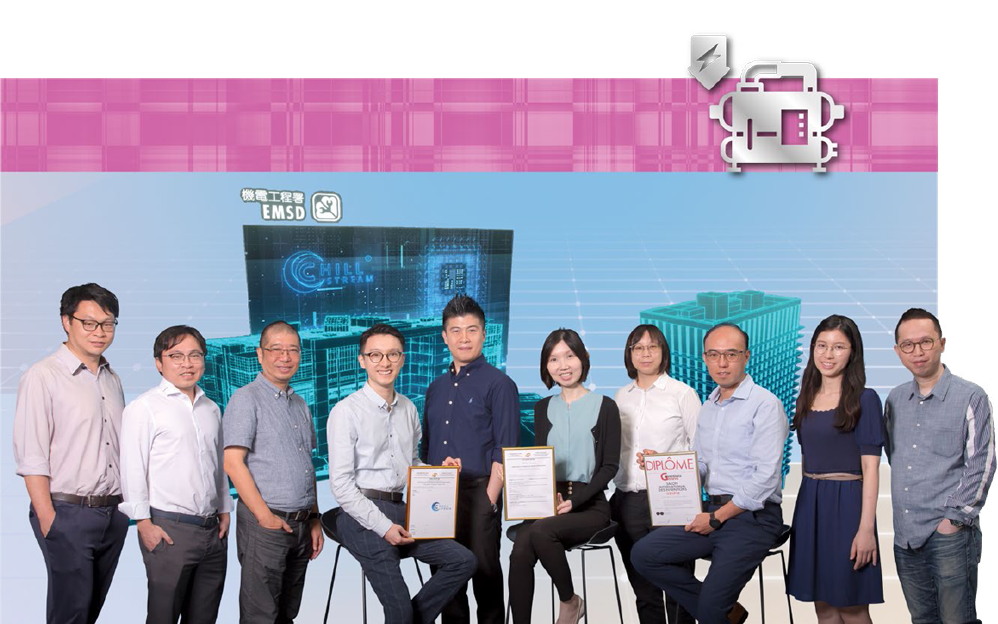
The rapid developments of AI in recent years have inspired officers of our Health Sector Division to develop ChillStream®, an AI-based Chiller Plant Optimisation System, in-house. The team reunited to share their research and development experiences.
Residents in one of the three blocks of Lai King Disciplined Services Quarters might still remember that the water supply was suspended for several hours on 19 January 2024, but was resumed immediately that evening. Little did they know that a team led by Mr Chu Ho-yin of the General Engineering Services Division (centre) worked non-stop behind the scenes to ensure normal operation of the water supply system in the next two weeks.
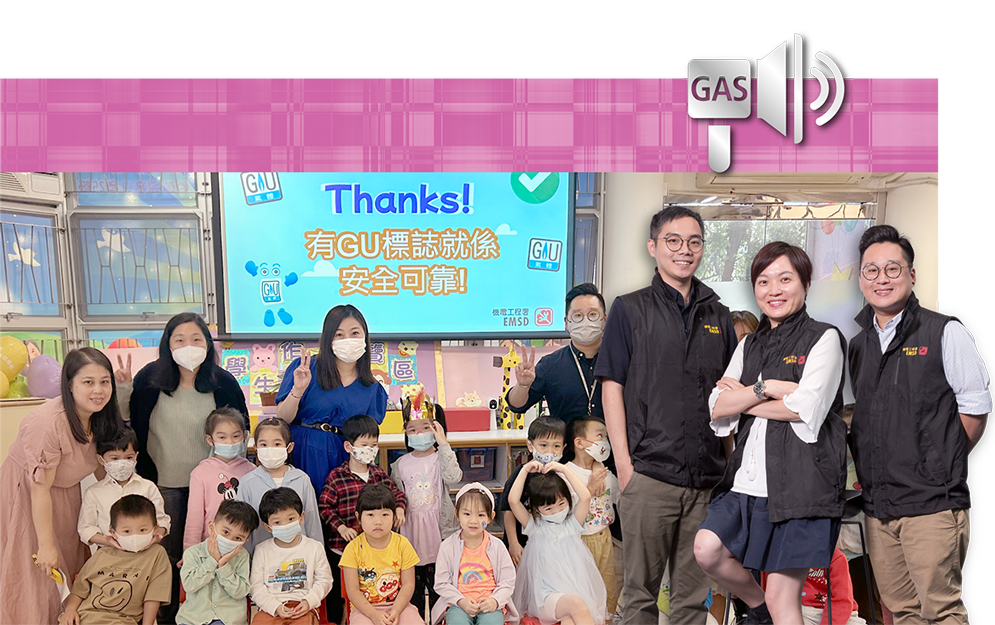
The causes of household gas incidents are closely related to the public awareness of gas safety. Users’ lack of safety awareness or their being misled by untrue information circulating in the community can easily lead to gas incidents. Therefore, the EMSD has been dedicated to disseminating accurate gas safety information to the public through a wide range of publicity approaches over the years.
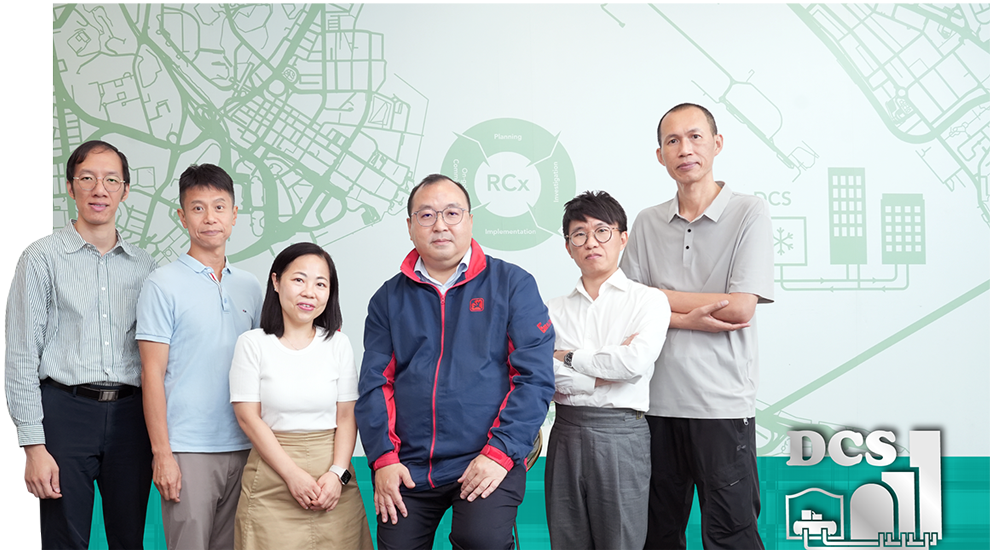
In 2023, Hong Kong experienced the impact of Super Typhoon Saola in August and the longest duration of the Black Rainstorm Warning in September. Thanks to the stringent daily monitoring and adequate preparations beforehand, operation of the Kai Tak District Cooling System (DCS) plant was not affected by the successive extreme weather. During the rainstorms, officers of the Energy Efficiency Division (EED) continuously monitored plant situation to ensure everything operated normally. Once the rain tapered off, the team promptly set out to various DCS substations to inspect the facilities’ condition for the sake of safety.
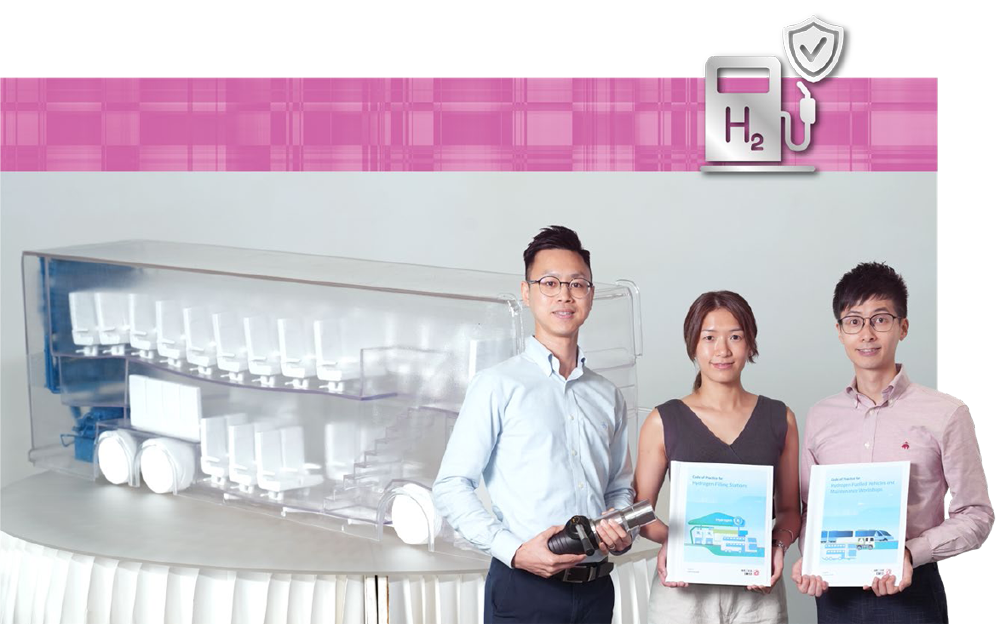
Today, the development of hydrogen energy has emerged as a new technological option for countries to achieve carbon neutrality. As a replacement for traditional fossil fuels such as oil, coal and natural gas, hydrogen has great potential for use in various fields, including power generation, transportation and industry.
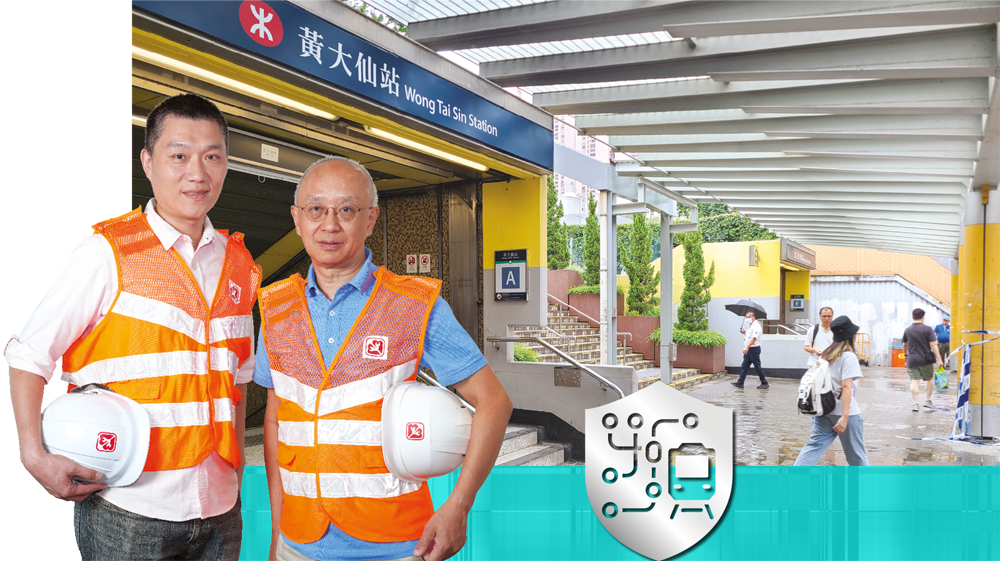
In the small hours of 7 September 2023, the Wong Tai Sin MTR Station suffered from severe flooding under extraordinary rainstorm, with a huge volume of rainwater pouring into the station concourse, platforms, tracks, and even the train tunnels, causing serious damage to the station facilities and bringing the station operation to a complete halt. The black rainstorm warning signal was in effect for 16 hours and 35 minutes, and not lifted until the afternoon of the next day.
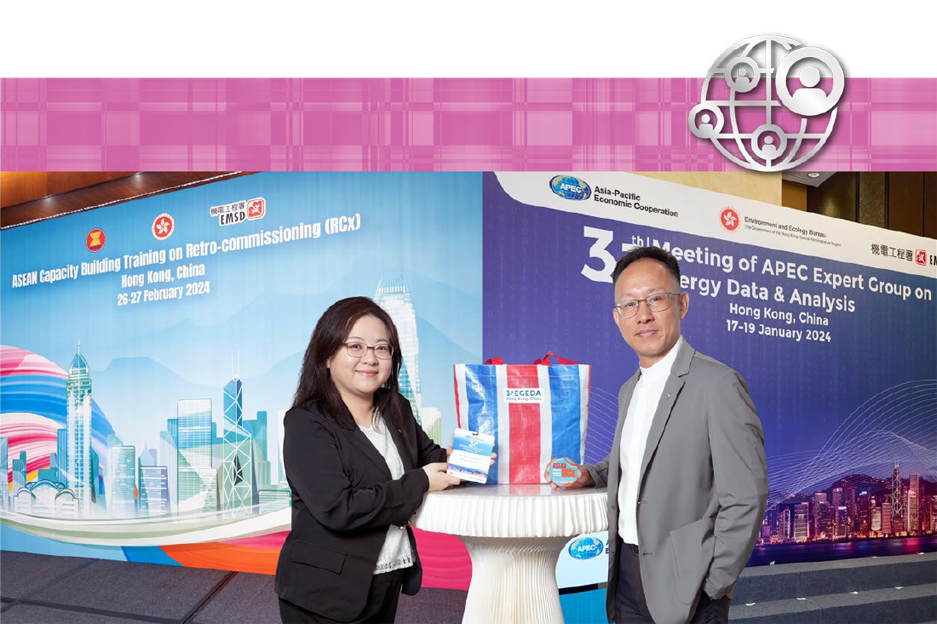
In 2023/24, the Energy Efficiency Division (EED) hosted several international events, including the 35th Meeting of the Asia Pacific Economic Cooperation (APEC) Expert Group on Energy Data and Analysis and Capability Building Training on Retro-commissioning (RCx) of the Association of Southeast Asian Nations (ASEAN). Representatives of different countries and regions were invited to attend the two events. The former event discussed the overview and progress of energy supply and demand, as well as collection of data on new energy technologies, whereas the latter event shared insights into and experience of applications of RCx technologies.
A gas explosion incident at the switch room of Greenwood Terrace in Chai Wan led to a power interruption. Apart from fully discharging their investigation duties, Mr Wong Pui-leung and his team went the extra mile and made every effort to assist in restoring power supply, serving the public wholeheartedly.
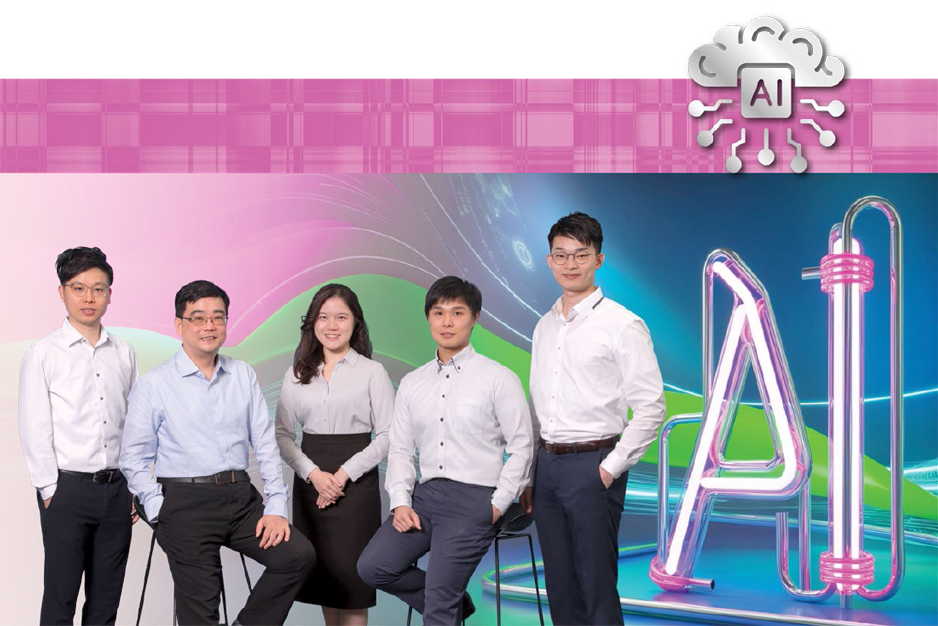
The launch of the EMSTF’s AI Master Action Plan in 2023 marked a new milestone towards Intelligent E&M. Mr Wong Wai-tat, Timothy, a senior engineer (2nd left) and his team, have been dedicated to the implementation of the plan. Mr Wong now explains the strategies and actions of the plan, and how the plan ushers us into a new age of plentiful opportunities.
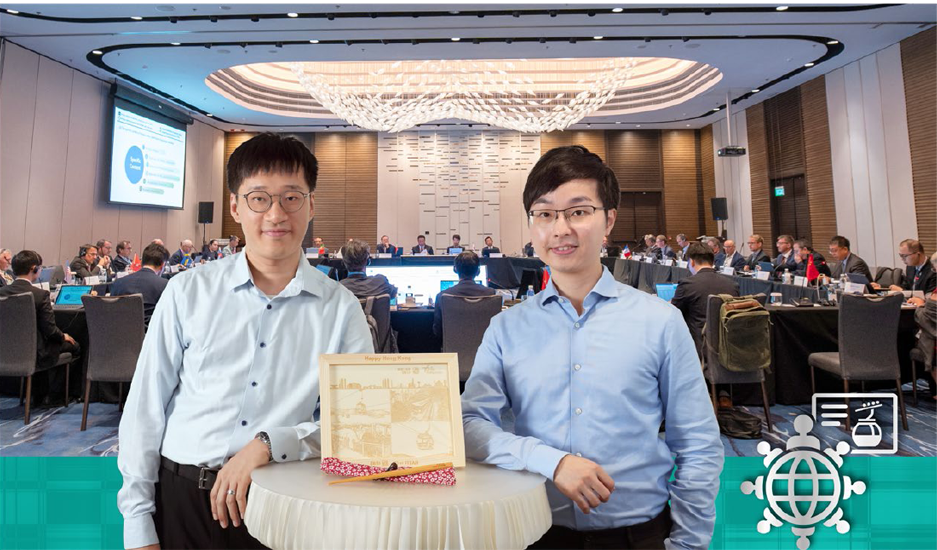
The International Meeting of Technical Authorities for Cableways (ITTAB) is an international, non-commercial and closed-door meeting held annually on a rotating basis by different supervisory authorities in charge of aerial ropeways and/or cableways around the world. The 71st ITTAB was not only the first physical meeting held after the COVID-19 epidemic, but also the first one coordinated by Hong Kong as the host city since Hong Kong became a member of the ITTAB in 2007, which was of great significance.
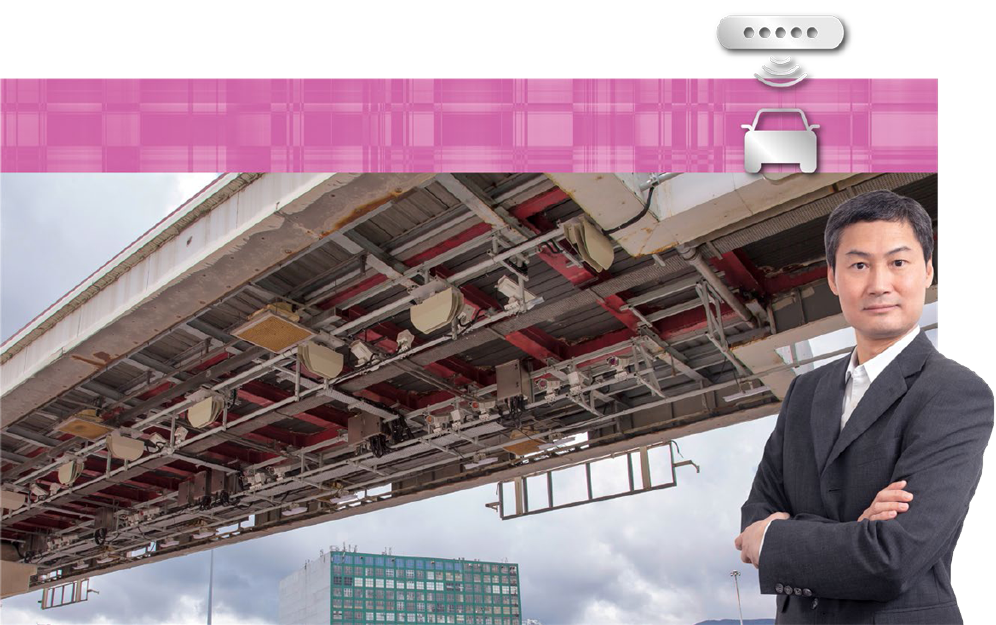
After years of hard work and meticulous planning, the EMSD team made comprehensive technical preparation and enabled the launch of Hong Kong’s first free-flow tolling system. Mr Yip Wai-leung of the Boundary Crossing Facilities and Transport Services Division unveiled the story behind the system.
Protecting Clients’ Assets and Serving the Community under Severe Rainstorm
Just a week after Super Typhoon Saola hit Hong Kong, an extremely heavy rainstorm occurred when the black rainstorm warning signal was hoisted for more than 16 hours. On the morning of 8 September 2023, Mr Chang Ah-hing, also called Hing Gor, received a fault report. He rose to the challenges and proactively returned to work to provide urgent services under the extreme weather conditions.
At that time, a power outage occurred in the Quarry Bay Municipal Services Building due to a flooded switch room of the Hongkong Electric Company, Limited (HK Electric) nearby. Hing Gor, who is responsible for the E&M maintenance work of various municipal venues at the Eastern District and Southern District of Hong Kong Island, rushed over to the scene to co-ordinate with the HK Electric and arrange to carry out urgent checking and repairs. “The biggest challenge then was assembling a repair team, who could travel to the site safely, within an extremely short period,” Hing Gor said. Upon some attempts, he confirmed that two EMSD colleagues and five contractor’s staff members could work in the site.
During the power cut, they had to primarily ensure sufficient illumination in the municipal services building by placing more than ten portable light emitting diode emergency lights on each floor. However, as all lifts in the building had stopped operating, Hing Gor and his team could only climb the stairs to place the lights. After conducting thorough checks on the systems, the team was relieved to find no anomalies in them, which exemplified our high-quality routine maintenance works.
Nevertheless, around noon, Hing Gor was notified of a serious flooding incident in the basement carpark at the Chai Wan Municipal Services Building. The team was immediately split into two, one stayed in Quarry Bay to monitor the resumption of electricity, while another rushed to Chai Wan. Upon arrival at the carpark at the Chai Wan Municipal Services Building, Hing Gor’s team found that the floor drains were blocked by gravel, sand and rubbish carried by flood water. As the water in the carpark then was already waist deep, the team decided to put on waders and manually remove all debris blocking the floor drains. Upon some hard work, the drainage system was cleared in the evening. The two teams worked non-stop until the early morning of the next day, enabling all E&M facilities in both buildings to resume normal operation.
Learning from the experience, Hing Gor said that team spirit was vital and expressed his gratitude for the full support of his colleagues. “Staying calm is the most important thing to cope with emergencies, and knowing the abilities of our colleagues can help deploy manpower effectively,” he also emphasised. After the mission, he also made improvement suggestions, such as using flood barriers to better protect lifts against flooding. “Being a member of the EMSD, we are proud to serve the community with heart and soul,” he said enthusiastically.
An Extraordinary Christmas: Safeguarding Client’s Assets Round-the-Clock
The Christmas in 2023 was truly unforgettable for Mr Chio Yung-an, an engineer of the Security and Vehicle Services Division, as he and his team had to provide emergency repair services for the air-conditioning system of the New Territories Fire Services Communications Centre (FSCC), located in a newly refurbished building within the Ma On Shan Fire Station. While the building was not yet put into service, its data centre servers were already in trial use and the air-conditioning system had to operate constantly to cool the servers.
The morning of 22 December was exceptionally cold. Mr Chio, who was responsible for E&M maintenance of the Ma On Shan Fire Station, received a fault call early in the morning, which reported that the chiller of the FSCC air-conditioning system had shut down, setting off a high temperature alarm in the data centre. The maintenance team soon found that the Central Control and Monitoring System (CCMS) of the chiller of the air-conditioning system had a fault alert, because the sudden plunge in temperature overnight had triggered the chiller’s self-protection mode to shut down automatically. Unfortunately, neither the duty chiller nor the standby chiller was able to restart automatically as designed. The failure was due to programming problems with the CCMS software. “We immediately asked the vendor to adjust and refine the CCMS software, and in the meantime, we also had to monitor the chiller manually round-the-clock,” Mr Chio said.
As the incident occurred on the Winter Solstice Festival, followed by the Christmas holidays, the biggest challenge was to arrange enough manpower to monitor and operate the air-conditioning system round-the-clock while the CCMS was being fine-tuned. This meant that some colleagues were unable to have dinner with their families on the Winter Solstice evening, and even had to sacrifice their Christmas holiday activities. “Thanks to the can-do spirit of our colleagues and contractors, we successfully set up a 24x7, two-shift roster for managing the air-conditioning system on site,” he explained. At that time, the system required manual reactivation after each automatic shutdown, as it could only operate in the semi-automatic mode. That’s why such manpower arrangement was necessary. Although the overnight shifts went through the ordeal of the cold winter, the team still fully discharged its duties to safeguard the equipment at the client’s venue.
The two-shift arrangement lasted from 22 to 26 December, after which the air-conditioning system was restored to its normal fully-automatic mode. However, taking no risk, the EMSD has since then stationed a maintenance team at the Ma On Shan Fire Station to respond to emergencies at any time. In addition, the team has also reviewed similar CCMSs at other venues and fine-tuned their software as necessary. “We give top priority to the clients’ interests, and they can rest assured of their assets,” Mr Chio reiterated.
ChillStream® - Self-developed AI Reshaping Operation Mode of E&M Assets
Deployed at the Regional Digital Control Centre (RDCC) in the EMSD Headquarters, ChillStream® is an AI system capable of remotely optimising the operation of chiller plants at clients’ sites. The system collects and analyses real-time data such as weather conditions, building cooling loads, and chiller plant operations, and then selects the best operational settings for chiller plants from all feasible parameters to improve their energy efficiency.
"This is the EMSD's first attempt to integrate the power of AI with the existing foundation of the RDCC to optimise E&M assets," said Mr Lam Kam-chun, Tommy, the then senior engineer of the Health Sector Division (HSD). From the outset of the ChillStream® project that started in May 2023, the team had decided to develop the algorithms in-house in order to grasp core technologies like artificial neural networks and evolutionary algorithms, and pave the way for future expansions. AI development requires cross-disciplinary collaboration, encompassing expertise in domains such as biomedical engineering, IT, electronics, E&M engineering, and building services engineering. The support and co-ordination of frontline staff are also integral to the process.
In September 2023, the team conducted its first trial at the Public Health Laboratory Centre (PHLC) under the Department of Health, and successfully optimised the operation of seven chillers remotely with ChillStream®. The team believes that if ChillStream® can perform well in the PHLC given its highly demanding requirements, it can perform well anywhere. It is estimated that ChillStream® can save 3-5% of air-conditioning electricity consumption. "We are promoting this solution to the Hospital Authority and will recommend it to all government venues in the future to reduce carbon emissions and ultimately achieve carbon neutrality," stated Mr Chiu Wai-leuk, Vincent, senior engineer, and Ms Yu Wing-kwan, Safiya, then engineer, of the HSD.
"We also explained ChillStream®'s robustness and reliability to frontline staff, including its automatic switch to the control mode of traditional building management system should the new system violate any safety rules," said Mr Chiu. Another advantage of ChillStream® is that it frees up precious manpower to handle other tasks like contractor management and supervision.
Not only was ChillStream® patented and registered as a trademark, but it also won a bronze medal at the 49th International Exhibition of Inventions of Geneva. Moreover, the project team was invited to attend the 2024 Institute of Electrical and Electronics Engineers World Congress on Computational Intelligence, the world's largest technical event on computational intelligence, held in Japan this July, and present a technical paper on the AI algorithm. "We are overjoyed that ChillStream® had leaped from an AI experiment into a successfully implemented project, gaining international recognition within just over a year. It is the fruit grew out of the concerted efforts of our team members," concluded Mr Lam Wing-hung, Ray, senior engineer of the HSD.
Putting People’s Needs First by Maintaining Uninterrupted Water Supply
One of the duties of Mr Chu Ho-yin, an engineer of the General Engineering Services Division, is to oversee E&M maintenance of quarters under the Government Property Agency. On the morning of 19 January, he received a fault call about the freshwater up-feed pump set in the building mentioned above. Upon rushing to the scene, his team soon found that the auto-transformer starters of both the duty and standby pump sets had been burnt out and triggered the fire alarm.
Rather than waiting for days or weeks to source a new pump starter replacement, the team decided to promptly commandeer a similar auto-transformer starter from the standby pump set of a neighbouring block in the quarters as an interim replacement.
“We knew this would increase the risk to both blocks of the quarters, as each could rely on only one functioning pump set. However, after weighing up the pros and cons, we believed that it was worth taking the risk if proper control measures were in place,” Mr Chu recalled. He pointed out that commandeering the pump set from the other block could help resume the water supply to this block quickly, so that its residents could return to normal life as soon as possible. In the cold nights of January, hot showers were particularly important for disciplined force residents who often had to work shifts and overnight.
After the auto-transformer starter borrowed from the neighbouring block was installed, the up-feed pump set soon resumed operation. Nevertheless, the automatic control function of the up-feed pump set had to be suspended for finding out the root cause of the fault first. Further investigation revealed that the water level sensors inside the roof water tank were malfunctioning, causing the pump set to abnormally switching on and off continuously within short periods of time. In order to maintain uninterrupted supply of fresh water, the team had no choice but to manually control the up-feed pump set to ensure an appropriate water level in the roof water tank.
Accordingly, the team had to work shifts to monitor the alarm signals and manually operate the pump system round-the-clock. Staff working overnight had to endure the extremely cold weather in January, with the temperature sometimes dropping to 4-5 degree Celsius at midnight. Also, as the pump room was cramped, they could only huddle outdoors, working in the bone-chilling wind and without any shelters.
The system finally resumed normal automatic operation on 1 February. The interim auto-transformer starter was duly returned to the neighbouring block after thorough checking. Talking about insights gained from this incident, Mr Chu said that customers’ needs and people’s feelings had to be accorded the first priority when public services related decisions were made. “We are truly grateful to everyone in the team for their dedication to public service, as they worked long hours in chilly weather to fulfil the mission,” he said.
Stepping up Public Education and Publicity to Reduce the Risk of Gas Incidents
In addition to performing day-to-day regulatory duties, Ms Winko Har, an engineer of the Gas Standards Office, had been actively taking forward public education throughout the year. She made good use of different channels to enhance citizens’ understanding of gas safety, and took the initiative to reach out to groups such as ethnic minorities and elderly singletons to instil in them the knowledge of proper use of gas appliances. Ms Har had also been exploring new publicity channels to enable more citizens to learn about the importance of gas safety.
In 2023/24, Ms Har organised a total of three gas safety talks for ethnic minorities and foreign domestic helpers, explaining the key points to note about the safe use of domestic gas appliances, such as gas cookers. One of the talks impressed on Ms Har the problem of users’ safety awareness in particular. She said, “I have observed that some foreign domestic helpers lack safety awareness in using gas cookers, and this is likely to be attributed to their employers. For example, their employers neglect the importance of maintaining good ventilation. They keep all windows closed while using air conditioners in summer; and even when cooking, they do not turn on the exhaust fan or range hood in the kitchen to draw the exhaust flue gas to the outside, thus resulting in a rise in the level of carbon monoxide in the indoor environment. The domestic helpers may follow the wrong practices of their employers, hence increasing the risk of carbon monoxide poisoning.”
In addition, she noticed that many employers instructed their domestic helpers to place non-original accessories, such as “energy-saving rings” and tinfoil covering, on the gas cookers before cooking in order to save energy and keep them clean. However, the use of such accessories not only fails to save energy, but also increases the possibility of accidents. Through a series of talks, Ms Har clarified these misconceptions. She hoped that the ethnic minorities and foreign domestic helpers who had joined the talks would also pass on the correct information to their friends and families as well as their employers in the future, so that the chances of accidents will be reduced,” she said.
In terms of district work, Ms Har actively participated in regular gas and electricity safety talks organised by the District Fire Safety Committee, and explained the relevant safety guidelines to the local community at the talks. During the year, she also formed a gas safety volunteer team, which collaborated with a District Services and Community Care Team to conduct an outreach activity to visit elderly singletons in Fuk Loi Estate, Tsuen Wan, distributing gas safety pamphlets and souvenirs while explaining to them household gas safety information.
Apart from organising talks and outreach visits, Ms Har also adopted new publicity channels during the year, with a view to conveying the gas safety message to the public more effectively. She worked closely with the information programme department of the television station for the production of a promotional segment on the GU mark and gas safety, which was then arranged to be aired in an information programme shown during prime time. Ms Har invited a gas expert to share household gas safety tips in the programme, and reminded the audience to purchase domestic gas appliances bearing a GU mark, which signifies that the appliances have been approved by the Gas Authority and their safety is guaranteed. Furthermore, in view of the increasing popularity of online shopping, she reminded the public through the programme that when purchasing gas appliances without the GU mark from overseas or cross-border e-commerce platforms, they may be exposed to safety risks and may violate the law.
Ms Har concluded, “We hope to step up our public education efforts in the future to raise the public awareness of gas safety, with the goal of reducing the risk of household gas incidents to zero.”
Leveraging advance preparation and real-time monitoring to ensure normal operation of district cooling system during extreme weather
Before the storms arrived, the EMSD was on high alert to prevent any impact on electrical and mechanical facilities. Mr Jairus Wong, an engineer of the EED, stated that upon learning of the impending heavy rain, the DCS team quickly went to the Kai Tak DCS plant to implement wind protection measures, including inspecting all drainage systems to ensure they were unblocked, placing sufficient flood barriers and sandbags, and ensuring the proper operation of backup power supply systems and basement drainage pumps. The team also inspected the sump pits on the lowest floor of the plant and conducted special checks of potential leak locations. In addition, for possible equipment failures due to voltage dips, the team made advance preparations, including checking the operation of equipment and formulating relevant emergency response measures, which could enable the restoration of normal system operation in the shortest time possible in case of emergencies.
Although the DCS team had made thorough preparations for adverse weather conditions at the plant, they did not let the guard down or take things lightly when the rainstorm arrived. Instead, they stayed alert and on call for provision of support. Ms Midco Ma, a senior engineer of the EED, recalled, “The DCS team formed an emergency response team at that time in accordance with the emergency response procedure drawn up in advance. During extreme weather, we arranged for the operators to regularly check the status of the plant equipment and report the status to the EMSD. In the event of an incident, members of the emergency response team would immediately return to the plant by the pre-arranged vehicles for support and repair.” Ms Ma, who was in charge of the emergency response team, continuously received real-time updates from frontline officers and reported the relevant information to the Chief Engineer, while co-ordinating with other teams within the Department. Even though the extreme weather lasted for two days during the mega-rainstorm, every member of the emergency response team stuck to their posts to ensure the plant operated normally. Eventually, there were no emergencies at the plant during the extreme weather events, and the Kai Tak DCS continued its operation as usual.
In addition to ensuring the normal operation of the plant in times of typhoon and rainstorm, the EMSD also had to monitor the status of various DCS substations. Under the extreme weather, Mr Wong closely observed the status of the plant while on duty and planned the inspection schedule for various substations. “DCS substations are located within important buildings in the Kai Tak new development area, such as hospitals, the cruise terminal, railway facilities, the Kowloon East Regional Police Headquarters, government buildings and commercial complexes. While we can remotely monitor the status of the substations through the leak sensors installed inside, on-site inspections are still required to prevent potential issues that may emerge. Thus, we co-ordinated our inspection schedule with the operators during the rainstorms, so we could set out immediately once the weather improved,” he added. With thorough preparations made in advance, no major damage was sustained at any of the substations and the essential facilities of DCS functioned properly.
Thanks to the hard work and dedication of the DCS team in making comprehensive preparations, the DCS was able to withstand the rainstorms and operate normally. Ms Ma hoped that the team would continue to take a professional and rigorous approach and do their utmost to ensure the proper operation of the DCS at all times.
Accelerating the establishment of regulatory framework to jointly promote hydrogen safety
During the year, the EMSD has been actively promoting the development of hydrogen energy in Hong Kong through improving the regulatory framework, establishing standards, and providing technical support. To promote the regulation and safe application of hydrogen fuel in Hong Kong, the EMSD carried out a number of related tasks this year, including completion of the formulation of the Code of Practice for Hydrogen Fuelled Vehicles and Maintenance Workshops, the Code of Practice for Hydrogen Filling Stations and the Guidance Note on Quantitative Risk Assessment Study For Hydrogen Installations in Hong Kong, providing technical guidance to the industry and stakeholders. Moreover, our team proactively engaged in the preparatory work for the amendment of the Gas Safety Ordinance (the Ordinance) to cover hydrogen fuel, and participated in multiple trial projects by reviewing matters related to gas safety and providing technical support.
Ms Li remarked that compared to fossil fuels, the applications of hydrogen energy are still in their infancy. Currently, international regulations on the use of hydrogen as fuel are not yet mature, and there is no comprehensive set of regulations for reference. “Fortunately, Hong Kong has an effective Gas Safety Ordinance in place to regulate gas safety, and a proven track record of gas safety. We therefore consider it most appropriate to amend the Ordinance to comprehensively and effectively regulate the safe use of hydrogen as fuel in Hong Kong,” she said. She added that by adopting the well-structured Ordinance, Hong Kong could establish a more comprehensive and effective regulatory framework to govern the safe use of hydrogen fuel in comparison with other countries that were more advanced in the field of hydrogen fuel. Besides Ms Li and her team completed the consultation with the trade this year. They also met with different stakeholders to understand the impact of the legislative amendments on the business environment.
Mr Anson Wong and Mr Marco Lam, two other engineers of the GasSO, were actively involved in hydrogen projects. They were responsible for the commissioning of hydrogen vehicles and hydrogen filling stations respectively. During the year, Mr Wong oversaw the trial projects, including the first hydrogen fuel cell double-deck bus and the first hydrogen fuelled light rail vehicle (LRV) in Hong Kong, and Mr Lam supervised the construction and commissioning of a skid-mounted hydrogen filling station at a bus depot, as well as a hydrogen filling station at the Tuen Mun Light Rail Depot. Currently, the hydrogen fuel cell double-deck bus, which is the first hydrogen initiative in Hong Kong, has been put into service, while the testing programme of the hydrogen fuelled LRV has begun during the year.
Speaking of the difficulties in implementing hydrogen projects, Mr Lam pointed out that in the absence of relevant regulations to follow in Hong Kong, it is necessary to draw on the experience and standards in the Mainland and overseas, taking into account the unique circumstances of Hong Kong, so as to develop a set of standards tailored for the territory. He said, “Hong Kong is more densely populated and built-up than other regions, so we will make adjustments to the existing overseas standards to suit the actual situation in Hong Kong when establishing safety standards for hydrogen filling stations.” Regarding the retro-commissioning commissioning of the hydrogen fuel cell double-deck bus, Mr Wong saw great significance in the work. “Despite the challenges of catching up on the progress of the project and co-ordinating with multiple parties, it is truly meaningful to witness the launch of the first hydrogen project in Hong Kong from the ground up,” he said.
Swiftly Completing Inspection within the Golden Time for MTR Station Hit by Once-in-a-Century Downpour
To restore the station operation as quickly as possible, the MTR Corporation Limited (MTRCL) worked at full speed to repair the station facilities, including the automatic operation system, elevators, escalators, platform screen doors, and closed-circuit televisions. The Railways Branch (RB) of the EMSD, as the gatekeeper of railway safety, immediately dispatched personnel to Wong Tai Sin Station (WTS) to examine various facilities to see if they met safety requirements. Responsible for this important task were Mr Tam Lik-gong, Gareth, an engineer of the RB and his team, who conducted a comprehensive assessment of WTS to ensure that its services could be safely resumed. Even when the station resumed operation later, the team did not slack off, but continuously monitored the progress of repairs of the station, such that everything would be in order.
While the black rainstorm warning signal was in force, Mr Tam and his team were standing by, ready for missions. After the red rainstorm warning signal was issued, they immediately set off for WTS. “According to our operational protocols, we must ensure the safety of our colleagues, so we had to wait for the issue of the red rainstorm warning signal before deploying. Our duty was to ensure unobstructed railway operations before the resumption of train services. Hence, we had to rush to the scene at once, and race against time to complete our inspections in an orderly manner.” Mr Tam recounted. Mr Tam pointed out that WTS was already closed at the time, and the neighbouring roads were affected by flooding and fallen trees. Therefore, the team could only take the MTR to nearby Diamond Hill Station and then walk to WTS in the torrential rain. Upon arrival at the destination, the team inspected the flooding condition in the train tunnel and assessed the damage to the station facilities to ensure that the station remained safe as soon as possible.
On the morning of 9 September, the day that WTS reopened, there was still water accumulated in the ventilation ducts, damaging the tunnel’s overhead line system. They urged the MTRCL to take immediate action to replace damaged components. Besides, as several lifts and escalators were out of service, they also needed to evaluate whether there were sufficient pathways for crowd evacuation in the station. Mr Tam and his team promptly assessed the impact of the damage to the station facilities on crowd evacuation and proposed different response plans. After some efforts, the station could eventually reopen later that day.
Despite time constraints, the EMSD staff displayed professional and conscientious. During the assessment of crowd evacuation, they meticulously inspected every detail, and found out the original design of the station in a very short time for comparing and determining the extent of the damage. Even when data met the requirements, they still insisted on walking on-site to conduct inspections in person to ensure passenger safety.
As the station services gradually resumed, the EMSD continued to follow up attentively through regular on-site inspections and meetings with the MTRCL for further improvements, such as installing flood detection sensors, relocating flood barriers closer to entrances, and exploring the use of automatic flood barriers at high-risk stations. In this way, even if similar events occur in the future, these enhancement measures will help reduce damage and expedite service recovery, ensuring that citizens can use railway services with peace of mind.
International conferences organised successfully, accomplishing the important mission of the super-connector
Mr Wong Kin-tam, Anthony, a senior engineer and Ms Yip Wai-ling, Elaine, an engineer of the EED, took on heavy responsibilities in organising the 35th Meeting of the APEC Expert Group on Energy Data and Analysis in January 2024 and the Capability Building Training on RCx of the ASEAN in February of the same year. Their duties encompassed preparing for the events, co-ordinating the secretariats of relevant associations, delegations of various regions and international organisations, and hosting workshops and panel discussions. Apart from fulfilling their duties as engineers, they went above and beyond to provide memorable experiences of Hong Kong for overseas visitors.
Mr Wong stated that the attendees came from all over the world with different cultural backgrounds, so they had to carefully plan the events and local trips. Ms Yip said that they often put themselves in the attendees’ shoes to tailor event specifications, so as to take the attendees’ expectations and affordability into comprehensive consideration when arranging the event agendas, venues, site visits and catering. The two of them analysed details such as the number of visits to Hong Kong, backgrounds, financial backing and religious beliefs of the attendees, meticulously arranged their entire journey in Hong Kong.
Talking about the challenges in the process, Mr Wong explained, “It is not rare to encounter issues like audio-visual equipment glitches, or sudden changes in schedules that disrupt subsequent activities. However, we maintained our composure and bit the bullet, solving each problem one by one, so that everything went as planned”.
Ms Yip added, “Real-time multidimensional analysis and the trust of supervisors were key to the success of organising the two international events. Having regard to the risks of cascading effects, attendees’ desires and gains, staff’s willingness and capabilities, as well as the flexibility of venue transportation, my team and I adjusted the itinerary and workshop content to meet the requirements of all parties. We are grateful for the trust and support of our supervisors, which enabled us to smoothly conclude the efficacious events and achieve their goals.”
Successfully organising two international events in a short time, Mr Wong and Ms Yip were greatly encouraged. Both of them were gratified by the collaboration between the participants and EMSD staff, who jointly met the energy challenges in the region. These events not only provided the two of them with invaluable experience and established international networks, but also deepened their understanding of effective communication, teamwork and adaptability, which are the skills that will be applied to promote low-carbon energy development in Hong Kong.
They fully performing the function of Hong Kong to serve as a super-connector between the Mainland and the international community, and showcasing the EMSD’s ability to take timely and appropriate actions.
Always going the extra mile to provide people-oriented service
On the afternoon of 29 January 2024, a gas explosion occurred in the switch room of Block 6, Greenwood Terrace in Chai Wan, resulting in injuries of two workers and a complete power outage in the entire building. Upon learning of the incident, Mr Wong Pui-leung, an electrical and mechanical engineer of the Electrical Legislation Division, and his team promptly rushed to the scene. Mr Wong recalled, “On the day of the incident, my team and I went to the scene to understand the situation immediately after we saw the breaking news about the explosion. We conducted an in-depth investigation with officers from the Fire Services Department and the Police Force, and quickly concluded that the incident was not related to electrical faults.” Although Mr Wong and his team had completed their work then, they recognised the power outage would bring much inconvenience to the living of the residents, and thus even though the responsibility for restoring power supply rested with the property management company, they decided to go the extra mile and took the initiative to help restore power supply, demonstrating the civil servants’ commitment to their work and the people-based service culture.
The team leveraged their expertise to help formulate a power restoration plan and made all-out efforts to speed up the power restoration work, in order to safely resume the power supply within the shortest time. Mr Wong stated, “The process of drawing up a power restoration plan was very challenging, as we had to co-ordinate with various stakeholders, including the power company, property management company, registered electrical contractor and residents, addressing their concerns and requirements. Besides, we provided professional technical support and made appropriate deployment of equipment with agility, in order to restore power supply as fast as possible while ensuring safety, thereby minimising the impact of the incident on the residents.”
Mr Wong and his team remained on-site for two consecutive days, working day and night until power supply was restored. Due to the unexpectedness of the incident, the team members had to sacrifice their scheduled gatherings with friends and family activities to fully commit themselves to providing assistance in the restoration work. Afterwards, Mr Wong told his children, “Even though I couldn’t see you for two days, I worked hard to help over 300 households, restoring power supply quickly, so that their living could resume normal. Civil servants should fulfil their duties and serve the community with dedication, always walking the extra mile and contributing to society.”
AI: Opening the Door to the New Era of Intelligent E&M
The EMSD’s Artificial Intelligence (AI) Steering Group launched the departmental AI Master Action Plan in August 2023. Mr Wong Wai-tat, Timothy, a senior engineer of the Digitalisation and Technology Division (DTD), stated that the EMSTF’s first and second Five-year Strategic Plans had laid a good foundation, which made it easier to further AI development under the current third Five-year Strategic Plan.
Since joining the EMSD in 2002, Mr Wong has gathered rich experience in information technology projects over the years. In 2018, he joined the then newly established DTD and worked together with his team to take on AI development work. In February 2023, he helped set up a departmental-level AI team to support the EMSD in various AI projects on optimisation of energy efficiency, operation and maintenance, and E&M safety.
The AI Master Action Plan is based on the four-pillar framework of “training, action, collaboration and standardisation”. “Training” encompasses four levels of courses to enhance staff competence in AI. Level one is an introductory course in AI. Next is AI programming, followed by training in AI-embedded systems, while Level four is about AI modelling. As at the end of March 2024, about 900 persons have enrolled in the courses. Meanwhile, the EMSD also held AI workshops and seminars, as well as organising AI duty visits and conferences.
“Action” means implementing AI projects to gain experience. Mr Wong is particularly pleased about the current 28 AI projects under the Staff Motivation Scheme. AI Project Development Guidelines have been issued to guide our staff to conduct the development of projects in a secure and ethical manner. On “collaboration”, the E&M AI Lab website provides a platform for over 50 local, regional and Mainland partners of the EMSD to share experience. Other collaborations with AI experts in the trade and the Greater Bay Area have also made good progress.
As for “standardisation”, Mr Wong pointed out that the literature review version of the E&M AI Data Standardisation Guideline, jointly developed with two partners in Guangdong, has been completed. The common standards will be a game-changer in facilitating the portability and applicability of AI across systems and platforms. Standardisation also allows us to avoid over-reliance on a single vendor and/or brand, thus reducing risks in supply chain, security and other aspects. Moreover, the EMSD has rolled out a pilot AI Hybrid Cloud Platform and uploaded our AI projects to the platform, showcasing the best practices for enhancing risk awareness and mitigating risks for clients and the trade.
“Hardware today has better performance, stronger computing power and more user cases than in previous decades, so now is the time to flex our muscles, using AI to achieve Intelligent E&M and a better life for all,” he concluded.
Hosting the International Meeting of Technical Authorities for Cableways to Tell Good Stories of Hong Kong Vigorously
Mr Patrick Yim and Mr Klaus Tsang, engineers of the General Legislation Division, were in charge of the coordination of this meeting on behalf of the EMSD. During the five-day event, they and their team successfully facilitated international experts’ exchanges of experience on regulation of ropeway systems, led site visits to local aerial ropeways and cableways, strengthening the connections between the EMSD and technical institutions from both overseas and the Mainland, and endeavouring to tell the good stories of Hong Kong.
The 71st ITTAB, hosted by the EMSD, was successfully held from 17 to 21 September 2023, bringing together 29 international ropeway experts from 13 jurisdictions to exchange the latest information and developments regarding ropeway systems. A wide range of activities, such as working sessions, site visits, experience sharing, incident reviews, and networking among experts, were conducted during the meeting to enable attendees to exchange views on the administrative management and regulation of the safety of aerial ropeways and cableways while strengthening ties among international experts. By hosting and participating in this annual meeting, the EMSD could keep abreast of the latest global developments in aerial ropeways and cableways.
As the host of this meeting, the EMSD was responsible for coordinating the agenda and organising various activities. In particular, Mr Yim and Mr Tsang assisted with data analysis. They collected and collated the data on over 760 incidents and accidents from 21 regions, then analysed the data in detail and shared the findings with the experts at the meeting to facilitate their discussion on relevant topics. This scale of analysis marked a first for the industry and successfully sparked active discussion among attendees. At the meeting, experts from various regions exchanged views and had in-depth discussion on four major areas, including analysis of incident data, urban development of aerial ropeways, updates on international standards, and accident investigation.
Moreover, Mr Yim and Mr Tsang liaised with local cable car operators to arrange site visits for the attendees of the meeting. With the coordination by the EMSD, experts from around the world visited Ocean Park, the Peak Tram and Ngong Ping Cable Car, observing a total of four aerial ropeway and cableway systems, including their key areas such as the plant rooms, to learn about the operation and safety management of these facilities.
“Through hosting this meeting, the EMSD has further grasped the latest developments in aerial ropeways and cableways, and facilitated knowledge exchanges with experts from various regions. Besides, in response to the objective of ‘telling the good stories of Hong Kong’ outlined in the Policy Address, we meticulously arranged a ‘Tram Party’, a networking event rich in local character, after the meeting to showcase the vibrancy of Hong Kong to the participants and let Hong Kong shine in the world. On the evening of the event, the experts enjoyed a tram ride through bustling Hong Kong Island, dining and socialising while immersing themselves in the colourful night view of the city. The five-day meeting concluded with unanimous praise from the experts, whose positive feedback has given us great encouragement and filled us with a sense of pride”, Mr Yim and Mr Tsang summarised.
Milestone in Transportation: Implementation of Hong Kong’s First Free-flow Tolling Service
Starting from 5 a.m. on 7 May 2023, HKeToll, Hong Kong’s first free-flow tolling system, was implemented at the three tunnels within the Tsing Sha Control Area (TSCA). Mr Yip Wai-leung, a senior engineer who joined the Boundary Crossing Facilities and Transport Services Division in 2018, has assisted the Transport Department (TD) over the past few years in developing the system and participated in the project, from design to implementation, focusing on tender assessment, systems tests and drills.
Mr Yip explained in detail how HKeToll works. A passing vehicle is detected in three ways. First, the field equipment using the Radio Frequency Identification technology, reads a toll tag affixed to the windscreen of a vehicle. Second, the automatic number plate recognition technology is employed to capture the images of a vehicle’s number plate for automatic recognition of the vehicle registration mark. Third, the Light Detection and Ranging technology is used for identifying the class and dimension of a vehicle. The system makes good use of these technologies to detect vehicles and collect tolls remotely, so that motorists do not have to queue up and stop at toll booths for payment.
Mr Yip and his team arrived at 11 p.m. on 6 May 2023 at the TSCA Administration Building, where the servers of the field equipment were housed for detecting vehicles, generating transaction records and uploading data to the HKeToll Back-end System (BES). To ensure the smooth operation of the new system, more than 200 government officers, including Mr Yip and his team, as well as consultants and contractors closely monitored the operation of the system at the TSCA, the Emergency Transport Co-ordination Centre and the BES Back Office. “The TSCA was temporarily closed from 2 a.m. to 5 a.m. on 7 May 2023 to allow us to carry out the final stage of preparation work, and final tests on equipment and systems,” he added. At 5 a.m. sharp, the TSCA was re-opened to traffic and HKeToll was put into operation.
In December 2023, HKeToll had been rolled out at all government-tolled tunnels. With the Build-Operate-Transfer franchise of the Tai Lam Tunnel due to expire in May 2025, the EMSTF team is currently preparing for the introduction of HKeToll at the tunnel. “We attach great importance to the drills before launching the system, so at least two drills will be carried out for each tunnel in the weeks before the respective commissioning dates,” stated Mr Yip. In addition to HKeToll, the TD implemented Time-varying Tolls at the Cross-Harbour Tunnel, Eastern Harbour Crossing and Western Harbour Crossing on 17 December 2023. Different toll levels are charged at different time slots, in order to divert traffic and alleviate cross-harbour traffic congestion during peak hours. Mr Yip and his team offered staunch support to the TD on this project to ensure the stability of the system.
Mr Yip concluded, “I would like to thank my colleagues for their dedicated work in making the implementation of HKeToll possible. This free-flow tolling system has changed the driving habits of the public, and improved the operational efficiency of the road tunnels. We are glad to be part of this important project.”