The EMSD has been endeavouring to disseminate electricity safety information to the public through various channels, consistently achieving positive results. To educate grassroots citizens about electricity safety more effectively, Mr Cheng Ming-fai, Electrical and Mechanical Engineer, has actively engaged with different community groups to embed electricity safety information in the community and further deepen the understanding of electricity safety among grassroots citizens.
In the early days of joining the Electricity Legislation Division, Mr Cheng worked as an engineer in the Consumer Installations Sub-division, where investigating electrical incidents was part of his duties. During these investigations, he often witnessed the tragic scenes and the grief of the victims’ families, which deeply saddened him. Later, he was posted to the Publicity and Prosecution Sub-division by chance, and became determined to explore new promotional channels to raise electrical safety awareness among grassroots citizens, thereby reducing the occurrence of electrical incidents. He stated, “Hailing from a grassroots family myself, I fully understand grassroots citizens often face financial constraints. They may be reluctant to spend on improving electrical safety or have no time to attend electrical safety seminars.”
Therefore, Mr Cheng chose to innovate and change, actively liaising with different community groups to co-organise district activities that attract more grassroots’ participation, so as to spread electrical safety messages within the community widely. For example, he collaborated with the Mongkok Kai-fong Association Limited Chan Hing Social Service Centre and Love of Hong Kong to co-host a district activity, providing free Chinese medical consultations to grassroots families and residents of subdivided units (SDUs), while holding electrical safety seminars at the same time.
In light of the frequent electrical incidents caused by current leakage in recent years, most of which involved SDUs and village houses, Mr Cheng has partnered with non-profit organisations and village representatives to hold seminars and co-ordinated electrical safety inspections for residents of these dwellings. Understanding that grassroots citizens might face difficulties in improving their electrical installations, he was determined to go the extra mile for them, leveraging his professional knowledge and consolidating various social resources to address these issues for the grass roots. Recently, he successfully worked with a volunteer team from the trade to install or replace residual current devices in a number of village houses and SDUs, thereby reducing the risk of electrical incidents caused by current leakage.
Looking ahead, Mr Cheng hopes to continue embodying the spirit of “embracing innovation and changes to explore new opportunities; engaging with the community to serve the grass roots”, so as to promote electricity safety to grassroots citizens and improve the quality of household electricity safety.
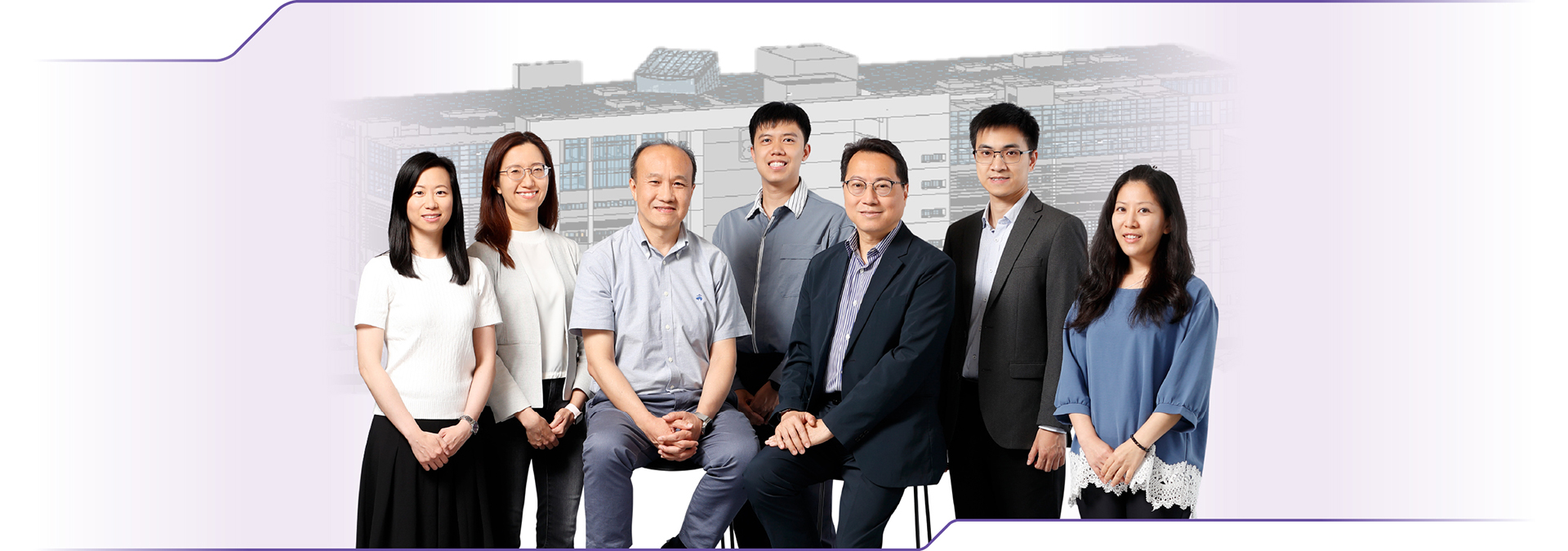
Building Information Modelling (BIM) technology has advanced rapidly in recent years. To further lower the barriers to BIM adoption, the Digitalisation and Technology Division (DTD), led by Mr Chan Hor-yin, Steve, a chief engineer (3rd right), has taken deep dives into the application of open BIM, developing tools to streamline the open BIM model conversion process. Their achievements have garnered international recognition.
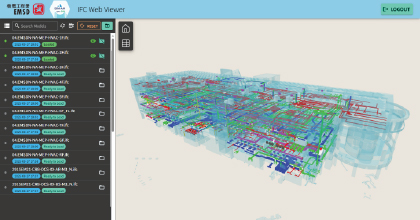
The EMSD is now developing a high-performance open BIM web viewer, providing a smooth and nice user experience with quick loading and rendering of BIM models. It is accessible directly without requiring any software installation.
An increasing number of works projects in Hong Kong are adopting BIM technology. However, the wide array of BIM software available in the market poses challenges for data sharing between systems. Small and medium-sized enterprises may need to cover multiple software licence and related training costs, which has become a major obstacle to wider BIM adoption. Mr Yuen Piu-hung, Francis, an electronics engineer (2nd right), noted, “If the industry can use a software-neutral open format and communicate in a unified language, the entry barrier for using BIM will be lowered.”
Utilising open data formats, open BIM enables collaboration across engineering teams regardless of the software they use. Yet, during the conversion of open BIM models, data loss often occurs, causing the models to fail acceptance standards. Manual error checking is also very time-consuming. The DTD developed a collection of tools specifically designed to streamline the open BIM model conversion process for E&M systems. Ms Ching Yuen-yuen, an electronics engineer (1st left), explained that the team consolidated EMSD’s years of handover experience and uploaded the requirements for various E&M asset attributes to the public building SMART Data Dictionary - the first and largest of its kind in Hong Kong - for industry reference. Moreover, the team developed conversion guidelines and plugins to assist users in converting open BIM models while minimising data loss. They also designed automated validation tools that save 90% of the time compared to manual checking of open BIM models.
The team won grand awards at local and international competitions. The team believes that open BIM can facilitate the diversification of BIM software, including promoting the application of Mainland-made software. The team is currently developing an open BIM model web viewer and an open BIM-enabled BIM-AM (Building Information Modelling – Asset Management) Portal, which can also be used by other works departments in the future.
On the evening of 12 June 2024, an underground cable fault occurred in Wong Tai Sin, resulting in a power supply interruption that affected multiple residential buildings and shopping malls in the area. Upon receiving the report, the EMSD immediately dispatched staff to the scene to follow up and provide technical support. Power supply was eventually restored in the early hours of the following day.
A series of power incidents took place in early 2024 raised a significant public concern. The EMSD's Electricity Legislation Division (ELD) team remained steadfastly on duty, pursuing all necessary follow-up actions. Upon learning of the large-scale power outage in Wong Tai Sin that evening, which would inevitably cause considerable inconvenience to residents during the sweltering summer heat, the team acted decisively and responded swiftly, demonstrating a high level of professionalism and teamwork, striving to restore power as quickly as possible.
Mr Lam Tin-sheung, Timmy, Electrical and Mechanical Engineer in the ELD, was the duty engineer that evening. He stated, "At that time, I was having dinner with my family. Upon receiving notification of the incident from the CLP Power Hong Kong Limited (CLP), I immediately reported it to Senior Electrical and Mechanical Engineer, Mr Wong Tsz-chung, and rushed to the scene with gear for the power restoration work.”
Drawing on his experience, Mr Wong promptly assessed the severity of the incident and efficiently assigned responsibilities to team members. He recalled, while working that night, he received a call from an off-duty ELD colleague who happened to be one of the affected residents and proactively offered assistance. "Even after finishing his shift, the colleague upheld the people-oriented spirit, putting public needs above all else. It was truly touching," Mr Wong added.
Upon arriving at the scene, Mr Lam witnessed multiple buildings plunged into darkness, with many affected residents leaving their home and gathering downstairs for fresh air. Recognising the urgency of the situation, he immediately seized the time to discuss with CLP to formulate the most efficient power restoration plan. He closely followed up on the underground cable repair works and provided technical support; while urging CLP to arrange mobile electric generators and lay temporary cables to support power restoration.
Through concerted efforts, power supply was successfully restored by the early hours of the following morning. Mr Lam recalled the cheers and applause from the residents when electricity returned, yet he remained on site until confirming that the lights of every affected building were on and the power supply was stable. Only then did he return home, exhausted but reassured. After a brief rest, Mr Lam returned to the office early the next morning to continue working proactively with the team on the incident’s follow-up, ensuring the power supply to Wong Tai Sin remained stable and reliable.
The Multi-trade integrated Mechanical, Electrical and Plumbing (MiMEP) method, one of the key technologies actively promoted by the Government in recent years, adopts an “off-site prefabrication and on-site assembly” approach that significantly enhances project efficiency. The Health Sector Division applied this method for the first time to replace the air-conditioning systems in two public hospitals, effectively reducing disruptions to hospital operations.
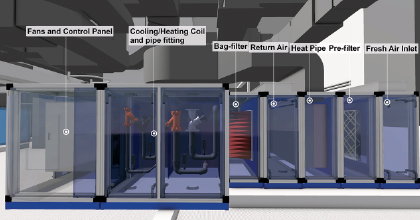
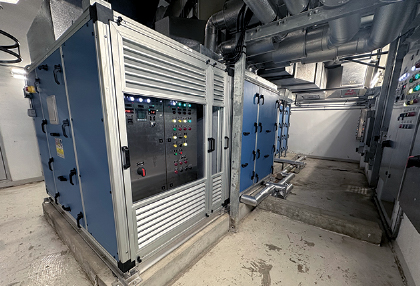
We adopted the MiMEP technology to replace the AHU at the Princess Margaret Hospital. By modularizing the units, we significantly reduced the on-site installation time.
The first project involved replacing the air-handling unit (AHU) and associated equipment at the Infectious Disease Centre of Princess Margaret Hospital. Mr Law Cheuk-yin, an engineer (2nd right), explained that the AHU, an essential component of the negative pressure system in isolation wards. To reduce ward downtime and improve quality control, the team adopted the MiMEP method. They first conducted a three-dimensional (3D) point cloud scan of the plant room housing the AHU to create a Building Information Modelling (BIM) model. The modularised AHU and pipework were prefabricated in the factory and then delivered to the site for installation. The entire project took about one month, saving approximately 40% of the time compared to conventional methods.
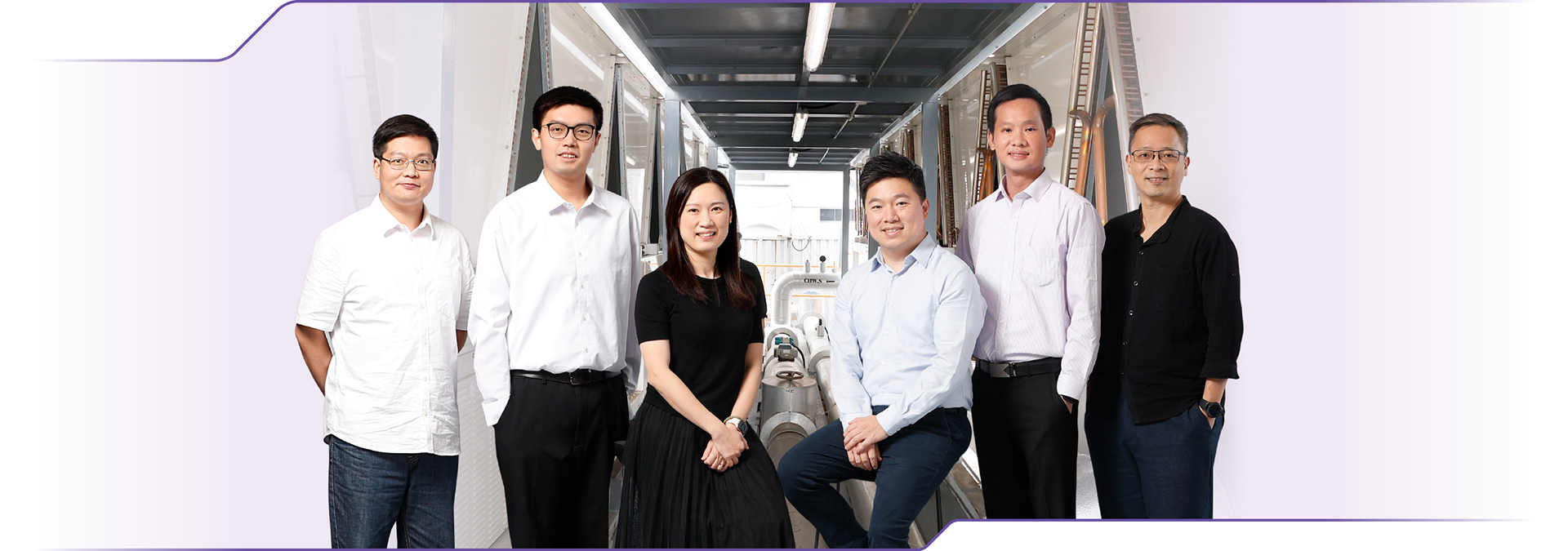
The advantages of the MiMEP technology become especially apparent in construction environments with stringent requirements, as demonstrated by the pilot project involving the replacement of chillers for the operating theatres in the Main Block of Pamela Youde Nethersole Eastern Hospital. Mr Wan Wing-kit, Victor, an engineer (2nd left), highlighted the project’s unique approach of installing new units before removing the old ones to minimise the impact on hospital operations. The original chillers were located on the rooftop of Block C of the Main Block. After inspection, the team identified suitable space for the new chillers on the rooftop of the adjacent Block A. However, connecting the new chilled water pipework system to the operating theatre floors required traversing the helipad and the vertical light well, with a pipe run exceeding 100 metres. Limited daily construction hours on the helipad also added complexity to the task. Mr Wan said all cutting and welding processes were completed in the factory, requiring only screw fastening on site. This approach not only shortened on-site construction time but also reduced high-altitude work, thereby enhancing work safety.
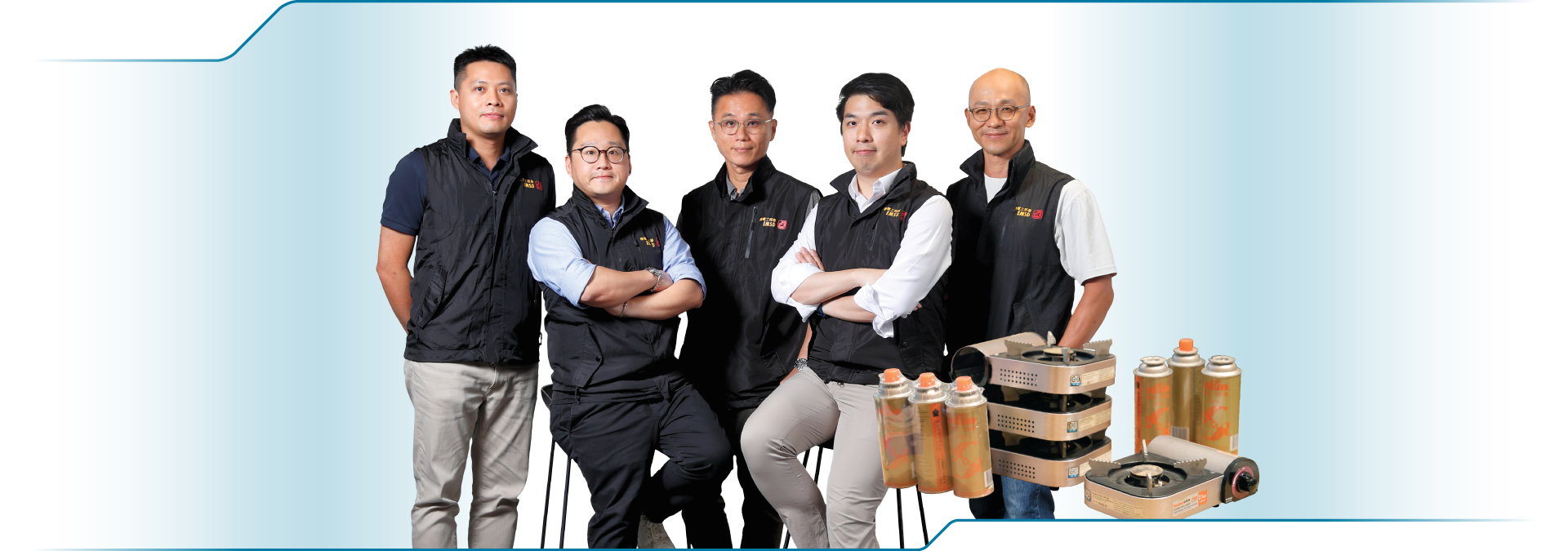
Hotpot cuisine has long been a favourite among Hong Kong citizens, with many restaurants providing LPG cassette cookers to enhance the dining experience. However, some restaurants use LPG cassette cookers that have not been approved by the EMSD (“non-GU appliances”), posing potential safety hazards to the public.
To safeguard public safety, the EMSD team launched a territory-wide inspection campaign during the year, targeting over 1000 restaurants serving hotpot or similar dishes and retailers selling LPG cassette cookers. The large-scale operation required meticulous planning to ensure the mission could be accomplished without disrupting the division’s normal operations. Mr Choi Ka-yu, Ray, Engineer cum campaign co-ordinator, remarked, “Around 1300 such restaurants are spread across various districts, and most operate during evening hours, thus limiting our inspection window. We strategically planned inspection routes and schedules to maximise efficiency while minimising disruption to their businesses.”
Talking about the operational challenges, Mr Tse Kwok-ning, Assistant Mechanical Inspector, remarked, “The tight inspection schedule coincided with our routine duties. Fortunately, with strong teamwork and flexibility, we completed all inspections within just four months and successfully overcame the challenges.”
In response to the concerns of restaurant proprietors about the inspections, Mr Tang Kwun-wing, Mechanical Inspector, highlighted the importance of patient communication. He said, “Some proprietors were initially worried that inspections might affect their business. However, after our team explained in detail the causes of past incidents, they came to understand the importance of ensuring safety and were willing to co-operate and make improvements proactively.”
During the inspections, the team identified the use of “non-GU appliances” in some restaurants. To intercept such appliances at source, the team conducted monthly inspections of 30 retail outlets. Mr Ng Chui-keung, Nick and Mr Lau Chi-shing, Assistant Mechanical Inspectors, emphasised, “Whenever we discover the use or sale of ‘non-GU appliances’, we will immediately seize the exhibits for investigation. Prosecution will follow if sufficient evidence is found. We are committed to safeguarding gas safety and upholding a zero-tolerance stance on non-compliance.”
Looking ahead, the EMSD will continue to strengthen publicity and education efforts in communities and restaurants, with a particular focus on promoting gas safety in public housing estates and at boundary control points to further raise public awareness. “Embracing a proactive prevention approach, we will make every effort to safeguard gas safety in Hong Kong.” Mr Choi stated.
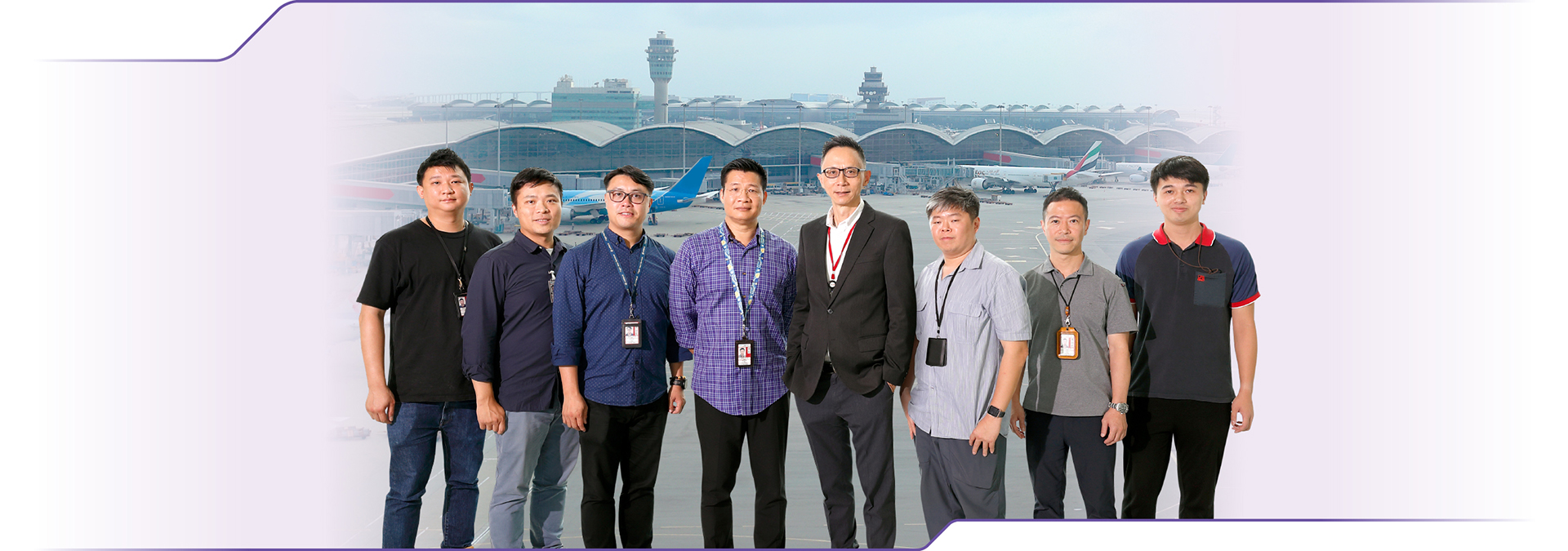
On 17 June 2024, a cargo aircraft departing from the Hong Kong International Airport (HKIA) made an emergency return and landed with burst tyres, causing damage to multiple airfield ground lights. Mr Leung Pak-kin, a senior engineer of the Boundary Crossing Facilities and Transport Services Division (4th right), led his team to swiftly repair the damaged facilities, helping restore normal airport operations and ensuring safe flight movements.
Early that morning, the Airfield Ground Lighting (AGL) Sub-section was alerted that a cargo aircraft had left tyre fragments on the South Runway during take-off, prompting the flights to switch to the North Runway for take-offs and landings. AGL staff immediately proceeded to inspect the South Runway and replaced the damaged airfield ground lights to ensure operational safety.
However, less than two hours after take-off, the cargo aircraft made an emergency return. At 7:12 am, it landed on the North Runway with burst tyres, causing damage to multiple airfield lights. Since the HKIA’s Three-runway System had not yet been commissioned at that time, only the South Runway was available for aircraft movements, resulting in severe disruption to flight operations. Mr Leung immediately co-ordinated the repair efforts. He remarked, “Airfield lights are crucial to safe take-offs and landings of aircrafts. If they are damaged, both passenger and cargo transport will be greatly affected. Therefore, we had to complete the repairs quickly to restore normal airport operations.”
Mr Lao Tak-fai, a senior electrical inspector (4th left), mobilised the AGL team at once, arranging for the night shift staff to remain on duty and work alongside the day shift staff to handle the incident. He noted, “The biggest challenge was the race against time. We acted quickly to retrieve the required lighting equipment from the warehouse and commenced the replacement works.”
Approximately 40 staff members participated in the emergency repair that day. At peak times, they were split into seven teams working simultaneously to complete the task in the shortest possible time. Mr Shum Wai-fung, an assistant electrical inspector (2nd left), who has served at the HKIA for over 20 years, shared, “This is the largest incident I have ever handled in my career. It was truly unforgettable. Thanks to our teamwork and tacit understanding, we successfully completed the task and felt very satisfied.”
Following the incident, the team had discussions with the client about increasing the inventory of lighting equipment to ensure sufficient materials were available to handle future emergencies and strengthen response capabilities.
The Airport Authority Hong Kong (AAHK) later issued a commendation letter to the team, recognising their exceptional performance. “Our mission is to uphold aviation safety through professional services and become a trusted partner to our client. We will continue to work closely with the AAHK to help safeguard and strengthen Hong Kong’s role as an international aviation hub,” Mr Leung concluded.
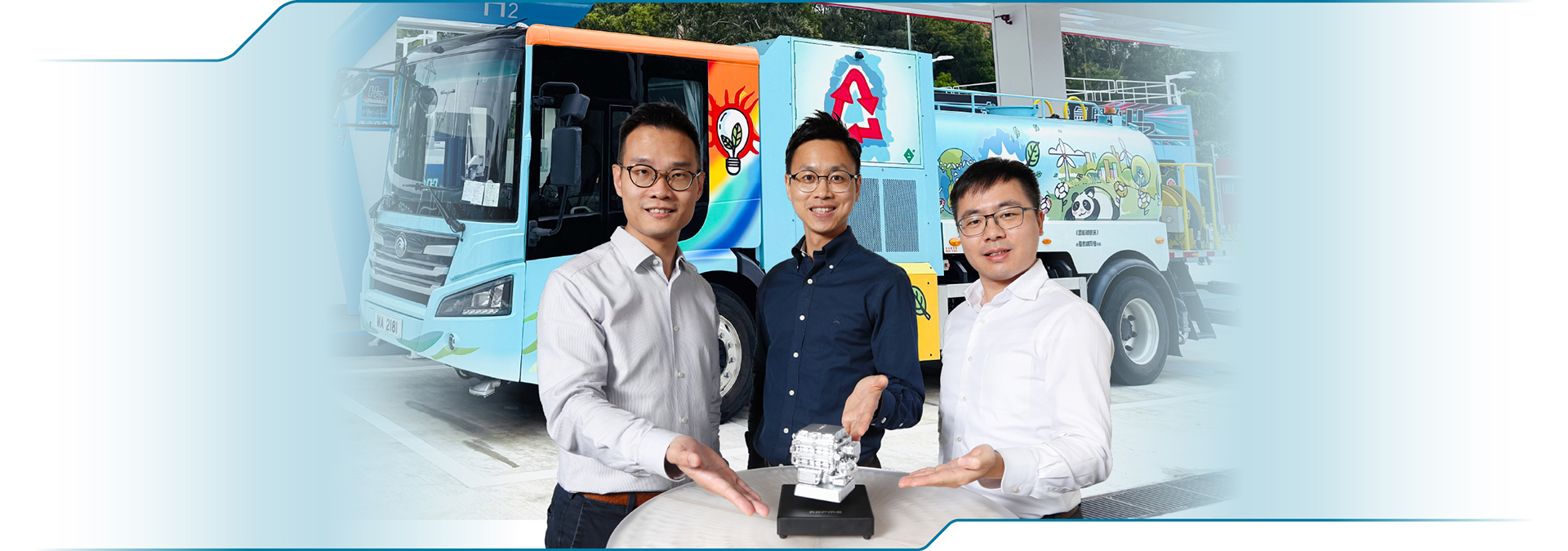
Promoting hydrogen development is one of the key strategies for achieving carbon neutrality by 2050. In addition to advancing amendments to the Gas Safety Ordinance, the EMSD successfully hosted two signature international events to foster the exchange of hydrogen technologies both locally and globally, telling the good stories of Hong Kong.
The legislative process for the Gas Safety (Amendment) Bill 2025 took six months, from its initial submission to the Legislative Council (LegCo) earlier this year to final passage. Engineer Chiu Kwok-wah noted, “The amendment process presented significant challenges. We had to prepare technical briefs within a short timeframe to address legislators’ enquiries. Through our team’s concerted efforts, the bill was passed smoothly, and we gained a lot of invaluable experience.” The subsidiary legislation is scheduled for submission to the LegCo for scrutiny in the latter half of next year. The amended ordinance and its subsidiary legislation will effectively regulate the entire hydrogen fuel supply chain, ensuring public safety.
Shouldering the role of a “super-connector”, the EMSD organised the first International Hydrogen Development Symposium this March. Engineer Tsang Hing-wai remarked, “Despite the challenges, I am very honoured to have participated in organising the Symposium. We had only four months to prepare for this mega event, but thanks to teamwork and multi-party co-ordination, we successfully secured the support of over 70 speakers from various hydrogen organisations in the local community, the Mainland and overseas, drawing an attendance of more than 800 experts. This Symposium showcased Hong Kong’s advancements in hydrogen development and truly achieved our goal of ‘going global and attracting foreign investment’.”
Later that month, the EMSD co-hosted the China International Hydrogen Congress and Exhibition 2025 in Beijing with the China Hydrogen Alliance. “We set up a Hong Kong exhibition area. Our Director not only delivered a keynote speech on-site, but also gave an exclusive interview to the China Central Television,” Engineer Lam Heung-chung recalled. “We were very honoured to share the development of hydrogen energy in Hong Kong with the nation, and explain the trial scheme for hydrogen fuel cell double-decker bus and hydrogen filling station in Hong Kong to the students present. It is exceptionally meaningful to foster low-carbon awareness among the next generation through popular science events.”
“As our Director said, by leveraging Hong Kong’s distinctive advantages of enjoying strong support of the motherland and being closely connected to the world, we can promote Hong Kong as a demonstration base for the development of hydrogen energy, building a green future for the next generation,” Mr Lam added.
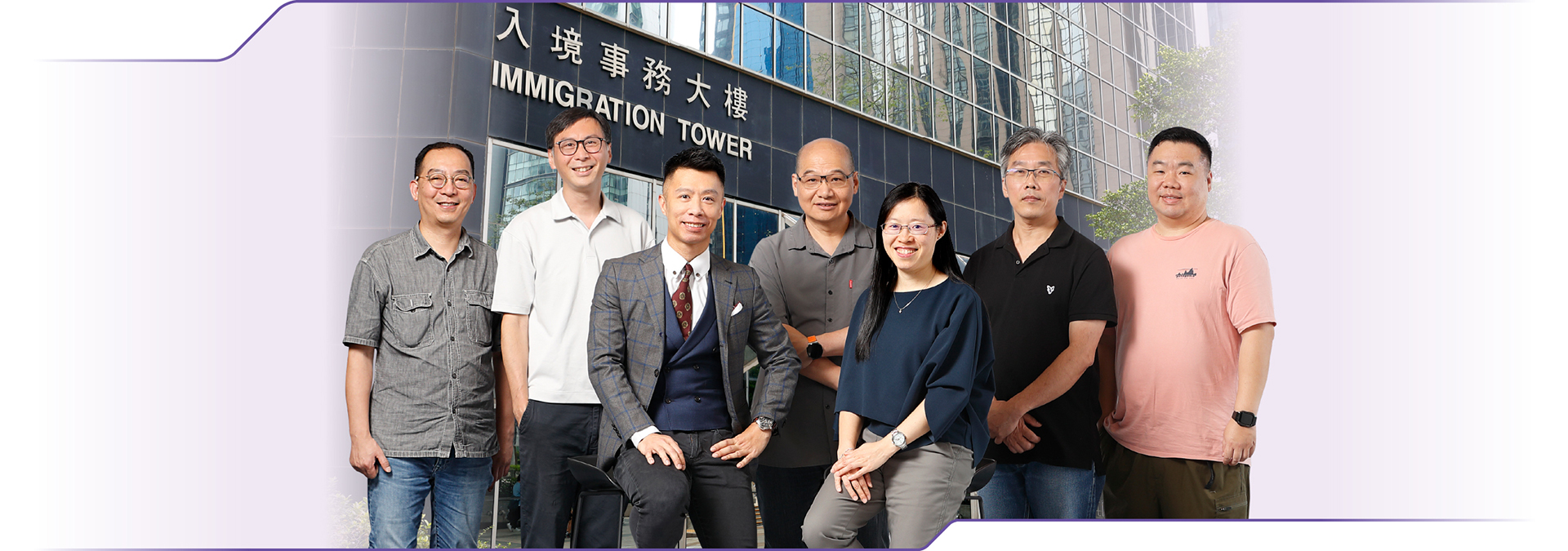
The Hong Kong Maintenance Sub-division 1 of the General Engineering Services Division, responsible for maintaining electrical and mechanical equipment at various government venues in Central, Wan Chai and Admiralty, has extensive experience in responding to emergencies. Last summer, when a power failure occurred at the Immigration Tower in Wan Chai, Ms Ting Pong-yau, Fanny, a senior engineer (3rd right), led her team in a swift response and successfully helped clients to restore public services.
At around 3 am on 28 June 2024, the maintenance team received an urgent notification of a power failure at the Immigration Tower. The team shortly rushed to the scene, and found that an air circuit breaker in the switch room on ground floor had tripped off. After a thorough inspection, they suspected that water had penetrated the casing of the bus duct, causing a short circuit that triggered a power outage affecting the 38th to the 48th floors of the building’s north wing. Among the affected departments was the Water Supplies Department’s (WSD) 24-hour Customer Telephone Enquiry Centre on the 42nd floor.
Given that the Immigration Tower was over 30 years old and had undergone frequent relocations of various government departments, identifying a suitable backup power source was a major challenge. The then regional manager, Mr Shee Kwok-wing, decisively mobilised another team of staff, along with contractors totalling around 40 people, to provide on-site support. Leveraging their extensive experience, they quickly identified a location for a temporary power connection. Mr Lau Chun-hong, a senior inspector (centre), was responsible for co-ordinating the work between teams, “We split into two teams, working concurrently to establish the temporary power supply. I closely monitored the entire progress on site and immediately dealt with any shortages in manpower or materials. Another team arranged for nearly 50 fans for our clients’ use.”
Ms Ting, who led the team, pointed out that as the WSD’s hotline service was affected, both the clients and the EMSD management were highly concerned about the incident. The team raced against the time to do the urgent repairs. By around 8 am, the temporary power connection was completed, restoring electricity to the telephone enquiry centre. Air-conditioning resumed at 2 pm, with the team continuously monitoring the power supply to ensure safety. Ms Ting described the day as feeling like a firefighting mission, and meanwhile they needed to reassure the clients. “When the air-conditioning just resumed, the room was still hot and stuffy. We patiently explained to our clients that air-conditioning consumed a lot of power, so we had to prioritise safety and restart the system floor by floor to avoid electrical overload.”
Despite the many challenges throughout the process, the team spirit demonstrated by EMSD staff was impressive. Mr Lau remarked, “Staff from different divisions, including those who had rarely worked together before, rushed to help us at a moment’s notice without hesitation. It was truly touching.”
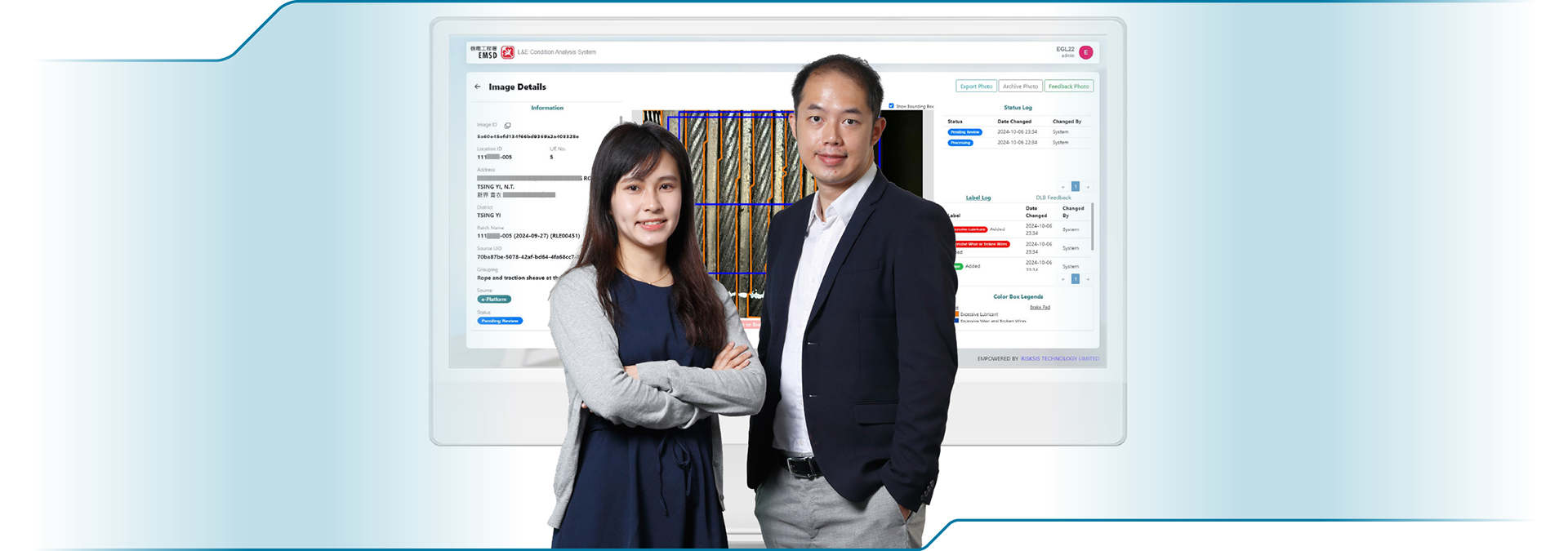
The Electrical and Mechanical Services Department (EMSD) has launched the Lift and Escalator Condition Analysis System, which utilises artificial intelligence (AI) technology to perform precise analysis of photos capturing key components of lifts and escalators to monitor their health status, thereby assisting relevant personnel in taking appropriate follow-up actions.
Electrical and Mechanical Engineer Mr Chan Chun-wai noted, “We conduct approximately 30000 inspections and collect millions of photos through various channels each year. Over time, it has resulted in a massive image database, which not only takes up substantial storage space, but also requires considerable time and effort for manual retrieval.” This practical challenge has given rise to the innovative idea of using an AI system to automatically identify and categorise the images.
To identify the most suitable partner for AI research and development, the EMSD team organised a competition, providing 100 photos of lift and escalator components for participating companies to assess their AI recognition capabilities. After selecting the collaborative partner, the team dedicated substantial time and effort to support the system development.
The team first screened and annotated photos of lift and escalator components from historical databases, then selected problematic areas within the images to train the AI module. The team also provided training for the AI company employees, instructing them how to identify component anomalies to ensure that the AI module could have sufficient learning data while maintaining accuracy. Through close collaboration between the team and the AI company, the system is now capable of successfully identifying and diagnosing anomalies in two types of lift and escalator components with an accuracy rate of up to 90%.
Mr Chan admitted that he was initially concerned about the trade’s acceptance of the system, and even worried that it might hinder the promotion of the Digital Log-books. However, since the launch of the system, feedback from the trade has been positive, with over 250000 photos uploaded to date, which is a gratifying result. Users can also make corrections through the system’s built-in feedback mechanism, further improving system accuracy. The team will continue optimising the system, expanding its capabilities to identify a wider range of lift and escalator components, thereby enhancing the efficiency and precision of regulatory work.
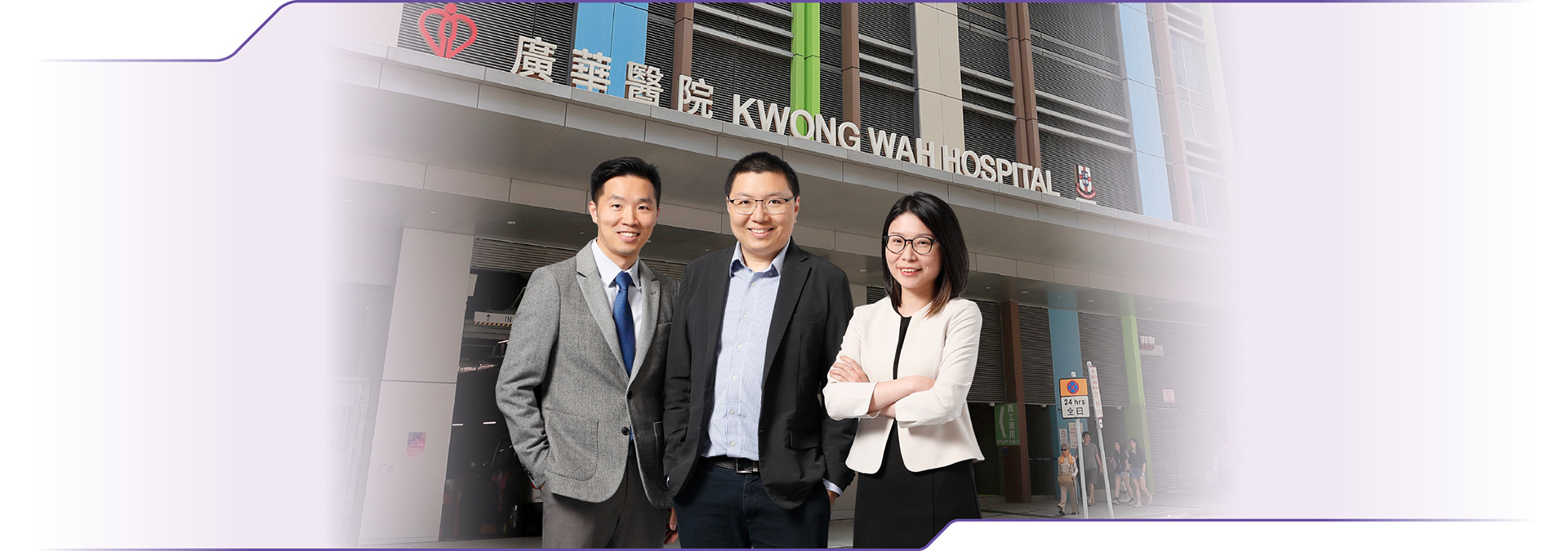
Large-scale engineering projects such as hospital development plans inevitably encounter various challenges during the initial commissioning stage. Take the power incidents that occurred at Kwong Wah Hospital (KWH) as an example. Although KWH did not fall under the maintenance responsibility of the EMSD, the Health Sector Division, as a longstanding partner of the Hospital Authority (HA), did its utmost and leveraged its expertise to help the HA resolve the crisis and safeguard patient safety.
In June 2024, a power interruption caused by the malfunction in the uninterruptible power supply (UPS) system affected the operation of operating theatres in the Phase 1 Building of KWH’s Redevelopment Project. Prioritising safety, the hospital rescheduled more than 20 elective surgeries to allow for comprehensive inspections. Ms Poon Hiu-ching, an engineer (right), recalled that she and her team closely monitored the situation, promptly reviewed similar facilities in other hospitals and mobilised resources to prepare for any necessary technical support.
With extensive experience in maintaining UPS systems for operating theatres at public hospitals, Ms Poon and her team, along with experts and representatives from the HA, conducted urgent testing and inspections overnight, aiming to restore system operation as quickly as possible. Ms Poon emphasised her team’s contribution in reviewing the test plan and procedures to ensure the testing methods were appropriate to accurately assess system performance within a short timeframe. “Although KWH is not within our maintenance scope, we deeply value the trust from the HA. Being able to use our expertise and experience to help manage the incident and contribute to the community brought us a great sense of accomplishment,” she said.
Mr Yip Wai-tong, a senior engineer (centre), and Mr Chan Wai-hung, an engineer (left), assisted KWH in addressing two power incidents caused by tripped relays in 2024 and 2025 respectively. In collaboration with the HA’s experts, Mr Yip conducted a thorough review on the architecture of the power supply system, explained the potential causes to hospital management and proposed improvement recommendations to facilitate further investigation. He recommended the hospital to establish emergency changeover procedures for handling power failures to improve overall response efficiency.
In the incident in 2025, Mr Chan and his team provided overnight technical support by swiftly reviewing the power system design, monitoring devices and data collected. They then recommended redistributing the power load across cables and conducting a power quality assessment to enhance long-term supply resilience. Mr Chan also led co-ordination efforts with the HA, university scholars, consultants, local contractors and overseas equipment manufacturer to carry out testing, ultimately identifying the root cause of the incident. “We have been working closely with the HA, standing side by side through many challenges. That is why we are willing to go the extra mile, not only by providing professional support, but also by proactively identifying areas for improvement at other venues under our purview,” Mr Chan concluded.
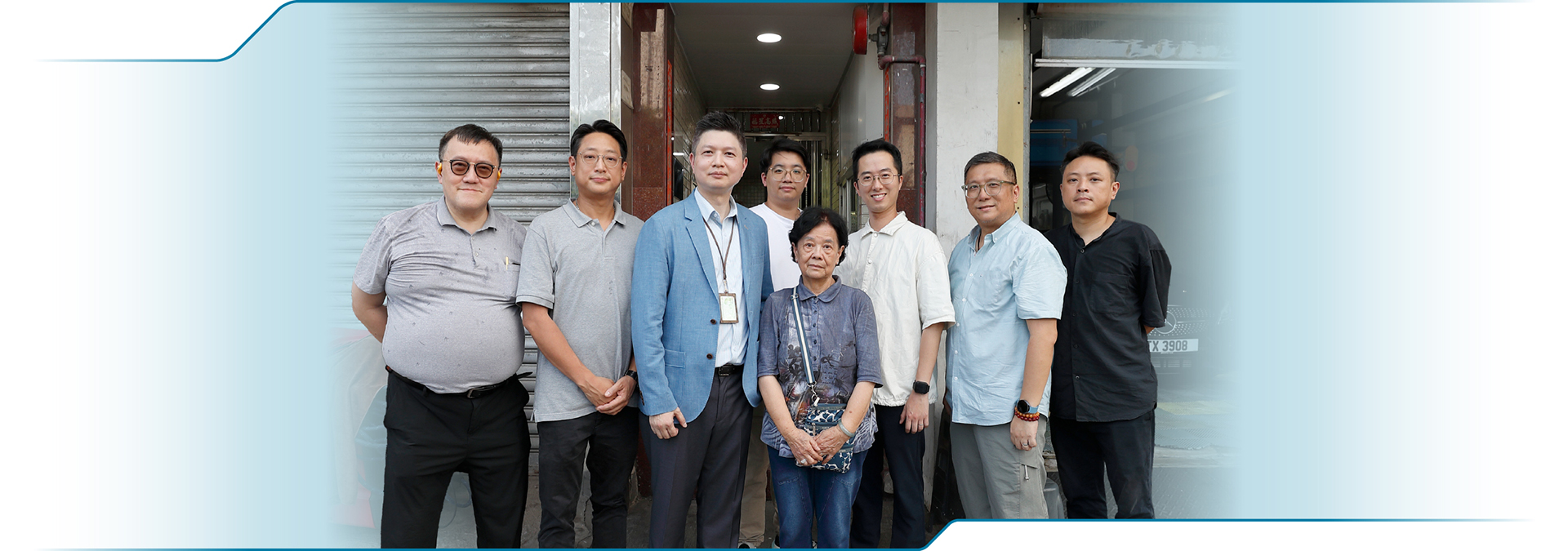
To minimise the impact of lift modernisation works on residents, the Electrical and Mechanical Services Department and the Urban Renewal Authority (URA) assist individuals with mobility difficulties in addressing their travel needs through outreach social support services. Among these efforts, Engineer Mr Lee Siu-man has been offering ongoing support to the affected buildings, ensuring timely completion of the projects.
An old building in To Kwa Wan, equipped with only one lift, participated in the Lift Modernisation Subsidy Scheme. Residents were generally concerned that the works would disrupt their daily lives. Through a questionnaire survey, we identified a household that needed to commute daily due to a family member’s special circumstances. However, the resident’s physical condition made the use of a stair-climber unsuitable while the cost of alternative accommodation was unaffordable. Upon learning of the case, Mr Lee decided to go an extra mile for the public’s well-being. He made every effort to help expedite the lift replacement works of the building, and obtained the URA's support to arrange temporary accommodation equipped with special rehabilitation facilities for the household, effectively resolving their travel difficulties.
During the pre-construction inspection, we found that the building’s machine room was exceptionally cramped. Additionally, due to the building’s aging structure, both the machine room and lift shaft required preliminary repairs. These factors increased the project’s complexity and compressed the construction schedule. To this end, Mr Lee collaborated with the project consultant and lift contractor to devise a customised pulley system to overcome the spatial constraints. He also conducted regular on-site inspections to monitor the progress and offered timely technical advice, ensuring that engineering issues were resolved in a prompt manner. Just before the final inspection, he identified an unstable component in the lift’s brake system, and therefore immediately instructed the contractor to re-order a new component for replacement, ensuring that the lift could successfully pass the inspection. The swift and close co-operation among all parties dramatically shortened the project duration from 90 days to 60 days, not only restoring the residents’ mobility sooner, but also allowing the affected household with special needs to return home earlier.
Mr Lee humbly stated, “We felt privileged to have received recognition and commendation letters from the District Council member and Incorporated Owners of the building for this case. We simply fulfilled our duty as civil servants, always upholding the spirit of ‘going the extra mile and putting people first’ to demonstrate care in every detail of our works.”
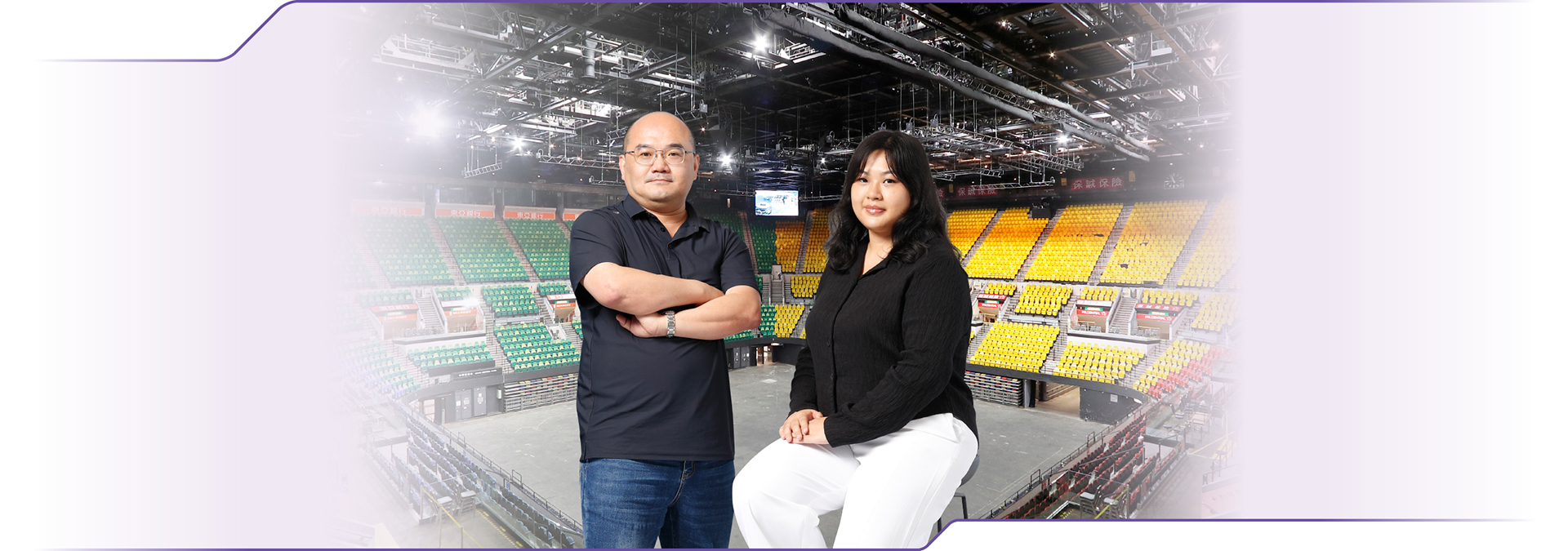
The four-sided projection screens at the centre of the Hong Kong Coliseum (HKC) hold the collective memories of countless audiences. However, after years of use, these screens have gradually aged. In preparation for the 2025 National Games, the Municipal Sector Division launched a major renovation project for the HKC at the end of last year, installing a new display system to enhance the audience’s visual experience.
Ms Kam Yuk-kwan, Lily, an engineer (right), said that this project was fraught with challenges. The team not only had to address the operational needs of the Leisure and Cultural Services Department (LCSD) but also consider the structural limitations of the nearly 40-year-old HKC. To this end, they removed the four projectors and projection screens, along with some seats in the four corners at the top of the venue. Supporting platform and steel frames were then constructed for installation of the new light emitting diode display screens.
During the design phase, the first hurdle faced by the team was load-bearing capacity. Each new screen measures 7 by 4 metres and weighs about 1.5 tonnes, including the supporting frame. Ms Kam explained, “Given the HKC’s decades-long history, the addition of large equipment to areas originally designed for seating presents structural requirements entirely different from those of a new building. We leveraged interdisciplinary expertise to develop feasible solutions.” Apart from the weight of the equipment itself, they had to take into account the additional load of maintenance personnel in the future, which necessitated multiple design revisions. Mr Cheung Chun-ho, Jimmie, a senior electronics inspector (left), added, “We tried to lighten the steel frames, including reducing the number of brackets and replacing the fixed maintenance platform with a mobile one.”
Due to the busy schedule at the HKC, the team has only 29 days to complete the dismantling and installation works. Nevertheless, during the installation process, the team discovered that the supporting platform and steel frames could not be installed according to the original drawings. Ms Kam immediately discussed emergency solutions with the Architectural Services Department, which was responsible for constructing the supporting platform. She recalled, “We proposed modifying the installation method, and both parties reached a consensus within a day. We then promptly sourced parts from the Mainland to stay on track.” By deploying two shifts of staff to work overnight, the team managed to complete the project on schedule. After thorough testing, the new system was launched smoothly in time for the National Games test events.
The new screens feature high pixel density and heat-dissipating casings, eliminating the need for cooling fans. Without the distraction from fan noises, audiences can fully enjoy the shows. The new system is also connected to multiple control panels at both the venue’s upper and ground levels, as well as the LCSD’s external control room, allowing for flexible operation. The team hopes that when audiences return to the HKC, they will appreciate the team’s commitment and dedication devoted to enhance their experience.
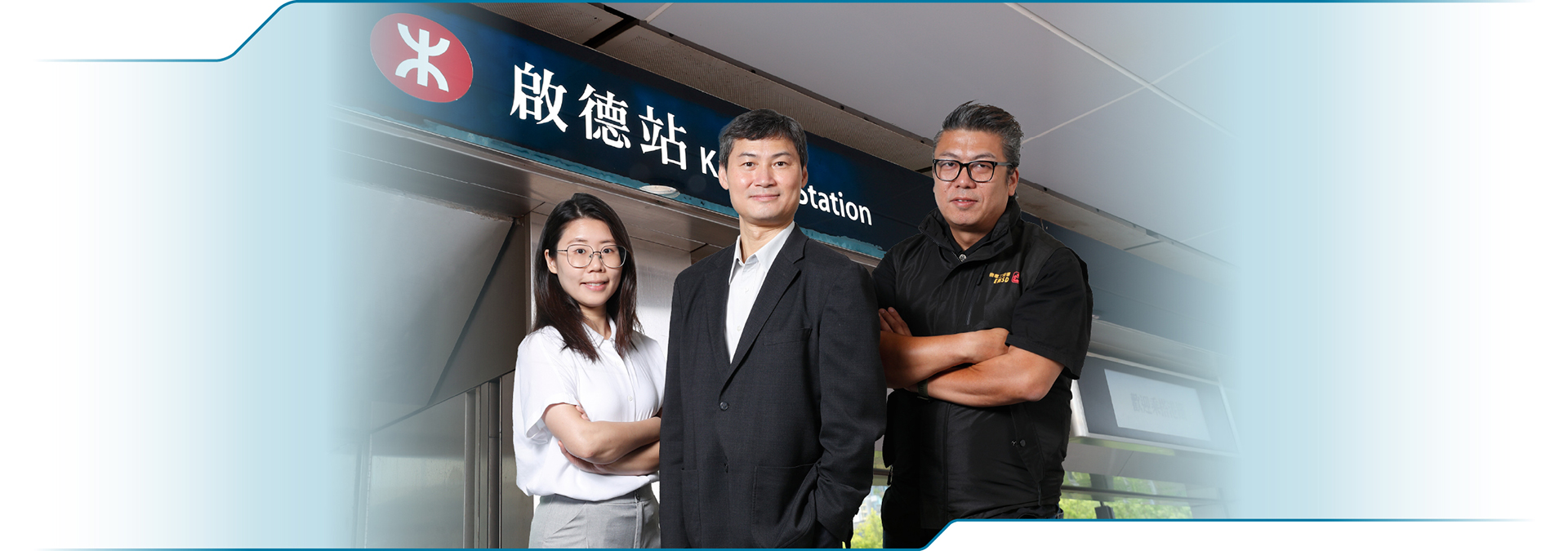
In preparation for the opening of the Kai Tak Sports Park, the EMSD and the MTRCL fully supported the HKSAR Government in conducting four large-scale drills prior to the opening to ensure the smooth operation of the railway system in crowd management, facility contingency, manpower deployment and emergency arrangements, safeguarding passenger safety.
As a new landmark for major events in Hong Kong, the Kai Tak Sports Park is expected to bring significant passenger flow, posing challenges to the railway system. Mr Yip Wai-leung, Chief Engineer of the Railways Branch, pointed out, “The success of the drills relied on close co-operation and communication among multiple parties, which enabled a seamless connection of every detail.” The first drill was held on 8 December 2024, simulating a peak crowd dispersal scenario. When a bottleneck was identified in the concourse of Sung Wong Toi Station, we immediately requested the MTRCL to deploy additional staff to assist in crowd management and to optimise exit signage. These experiences were then applied in the subsequent drills.
The scale of the drills gradually expanded, with the number of participants increasing progressively from 10000 to 60000. The drills covered the Kai Tak Stadium, Kai Tak Arena and Kai Tak Youth Sports Ground, while also putting a high load on two major stations of the Tuen Ma Line. During the drills, we stationed our staff on platforms and at gates to monitor the diversion work of passenger flow in real time, including the use of temporary guide rails, increase in train frequency and establishment of “buffer zones” to prevent platform congestion. During crowd dispersal, a tidal-flow arrangement was implemented, coupled with broadcast instructions, to disperse tens of thousands of people safely and orderly.
In response to extreme weather, we made advance preparations and developed a rainy-day contingency plan, even though the drills were conducted in winter. This included setting up “designated waiting areas” to prevent passenger congestion, and installing fans and laying anti-slip strips to ensure passenger safety. Given the frequent use of escalators during events, we also requested the MTRCL to have maintenance contractors stand by on site to ensure immediate repairs in case of any equipment failures, minimising disruption to passenger flow.
This series of drills not only aimed to test the smooth operation of the railway system under normal conditions, but also focused on identifying potential risks and enhancing the system's emergency response capabilities. Through multiple rounds of simulation drills, we have accumulated rich experience. With a “be well-prepared in advance” mindset, we are committed to enhancing Hong Kong's railway safety and public travel convenience, ready to meet the challenges to be brought by more major events.
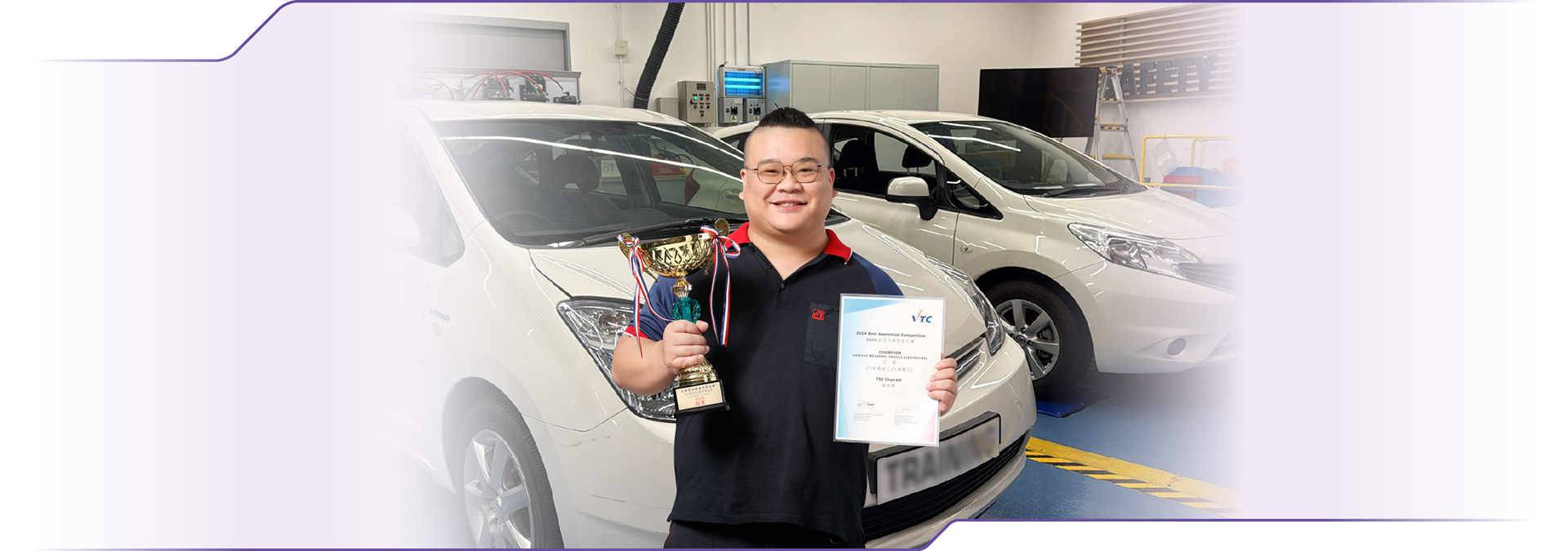
The Security and Vehicle Services Division provides maintenance services for over 90% of government vehicles. To ensure road safety and service quality, it relies on a team of skilled technicians. Mr Tse Chun-kit (Kit), a technician II, is one of them. Diligently completed the four-year apprenticeship, Kit was the Champion in the Vehicle Mechanic/Electrician Group in the 2024 Best Apprentice Competition organised by the Vocational Training Council.
Kit joined the EMSD in 2020 as a vehicle technician trainee. He shared that he intended to enter the vehicle maintenance industry since Secondary three, but was unable to enrol in a relevant course at that time. After completing Secondary six, he learned about the EMSD’s Technician Training Scheme and decided to apply. “The biggest appeal of EMSD’s training scheme is the opportunity to work on various types of government vehicles, a valuable experience normally not available in other apprenticeship schemes.”
At the beginning of his apprenticeship, Kit was assigned to the BMW Concessionaires (Hong Kong) Limited for practical training. He was like a blank slate, and the unfamiliar environment once made him consider giving up. Yet, he persevered. By observing carefully and humbly seeking guidance from his mentor, he gradually mastered the skills of vehicle maintenance and repair. Under the guidance of his mentor, he was able to independently perform tasks such as engine oil changing, replacing worn parts and repairing engines and chassis. After 14 months of training, he returned to the EMSD, where he specialised in ambulance maintenance.
Kit noted that although ambulances are equipped with flashing lights while general purpose vehicles are not, there is not much difference in their maintenance from a technical perspective. The real difference lies in his sense of responsibility when working on ambulance maintenance. He said, “Ambulances are life-saving tools. If a malfunction occurs while transporting a patient, the consequences could be dire. Every citizen in Hong Kong may need an ambulance, you never know if your loved ones may be on board one day.” For this reason, the EMSD sets a limit on the service life of the parts of ambulances and replaces them regularly, unlike the practice for private cars of which the parts are usually replaced only when they are faulty.
Upon completion of his internship at the EMSD, Kit was rotated to Scania (Hong Kong) Limited to acquire the skills of maintaining heavy goods vehicles. Having received various training in vehicle maintenance, he was nominated by the Department to participate in the 2024 Best Apprentice Competition. When preparing for the competition, he studied how to handle more complicated vehicle faults, further honing his skills in vehicle maintenance. Ultimately, he won the Champion in the competition, which he saw as a recognition of his efforts over the past four years.
Though his apprenticeship has concluded, learning vehicle repair is a lifelong journey. “Automobile technology is evolving rapidly. With the constantly emerging electric and new energy vehicles, we must continuously update our knowledge and skills to keep pace with the industry,” said Kit.
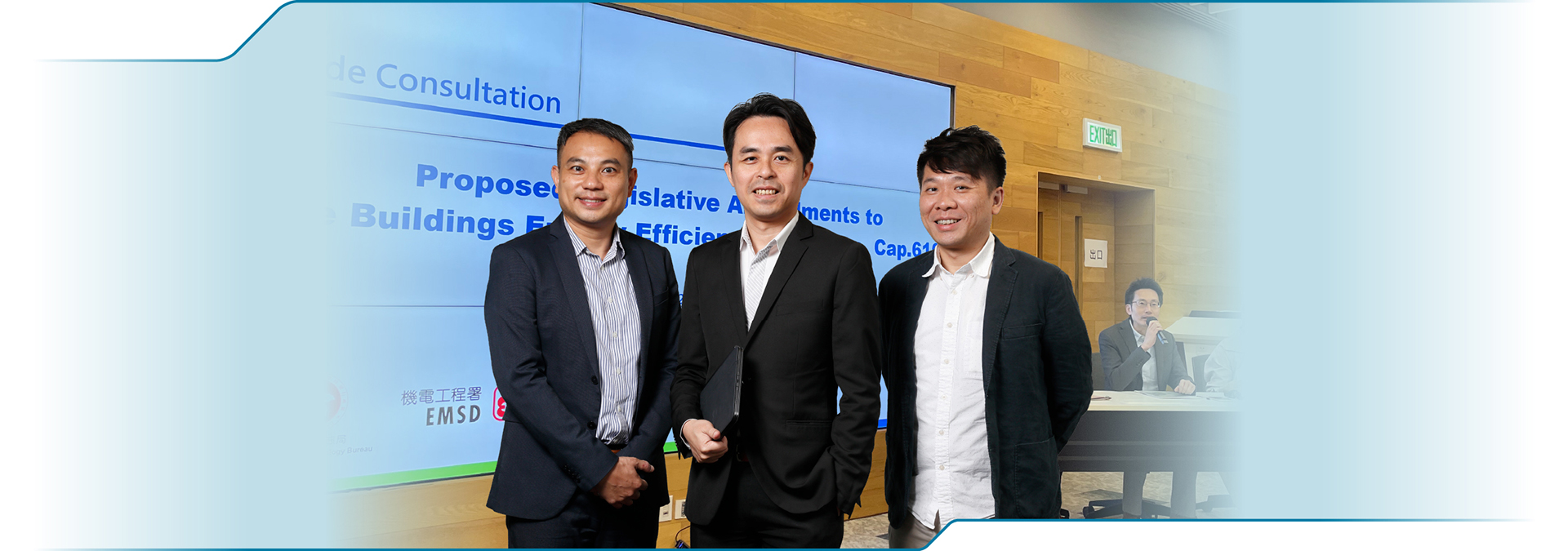
The Chief Executive’s 2023 Policy Address proposed amending the Buildings Energy Efficiency Ordinance, with an aim to expand the regulatory scope, disclose information in energy audit reports and shorten energy audit intervals. The EMSD initiated a public consultation in 2023 and submitted the amendment bill to the Legislative Council for consideration in March 2025.
Mr. Au Sze-lim, Sidney, Senior Engineer responsible for this legislative amendment exercise, drafted the amendment framework based on Hong Kong’s Climate Action Plan 2050 and proceeded with subsequent work under this framework. Mr Au said, “As legislative amendments involve a wide range of stakeholders, the opinions gathered through the consultation are very diverse. The biggest challenge lies on effective consolidation of different views to formulate policies that are both appropriate and feasible.”
The proposed amendments seek to bring more types of buildings under regulation, including data centres and buildings for community or education purposes. Through extensive reach-out to various sectors, we collected a wide array of opinions. Mr Au likened the legislative amendment exercise to listening to a symphony of the society. Only through direct experience and attentive listening can we get into the core of the issues.
During the reach-out and consultation process, we found that the floor areas of some buildings were relatively small. Mandating such buildings to undergo energy audits might not be economically efficient. For this, the EMSD not only gathered opinions from various sectors through consultation, but also commissioned a third-party consultant to conduct a business impact assessment, objectively analysing the suitability of mandating energy audits for various types of buildings. By consolidating feedback from the industry and professional advice from the consultant, we gradually assembled the full policy picture, and this is where the true value of the legislative amendment exercise lies.
Based on the above considerations, together with the team’s findings that the electricity consumption of buildings with a gross floor area not exceeding 7000 square metres only comprised 10% of the total electricity consumption for the corresponding building types, we proposed the exemption of such small-sized buildings from the mandatory energy audit requirement. This move reduces the number of regulated buildings by 60%, while still covers nearly 90% of the city’s total electricity consumption. It is estimated that after the amendments come into effect, 500 million kilowatt-hours of electricity can be saved annually by 2035, making a significant contribution towards achieving carbon neutrality goals for Hong Kong by 2050.
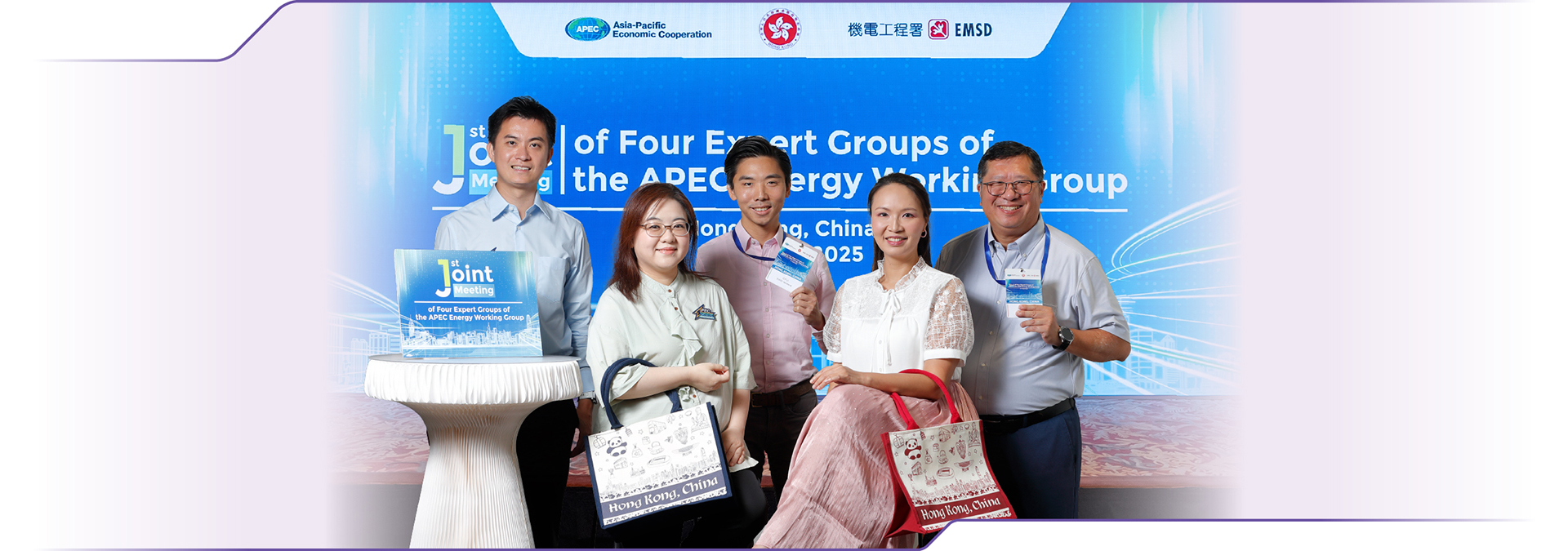
The EMSD has been actively participating in international conferences to promote the development of clean energy and facilitate regional energy transition through international co-operation. This year, the EMSD successfully hosted a significant event in Hong Kong, convening the first-ever joint meeting of four Expert Groups under the Asia-Pacific Economic Cooperation (APEC) Energy Working Group (EWG), which further deepened international energy collaboration.
Since 1990, the expert groups under the APEC EWG have consistently fostered regional energy co-operation through regular meetings. Senior Engineer Ms Kwok Ming-lo, Ming, said, “We are honoured to host this historic milestone event, which featured the first-ever joint meeting of all four expert groups of the APEC EWG in its 35-year history, and a concurrent workshop on optimising energy efficiency in power generation, attracting more than 100 experts from 18 member economies and four international organisations to engage in in-depth discussions on energy security, clean energy transition and other topics. The workshop participation rate exceeded our expected target by twofold, which was truly encouraging.”
The success of the event was attributed to the team’s multi-pronged strategy. Engineer Mr Li Chun-yin stated that the team strengthened global connectivity of Hong Kong while showcasing local hydrogen projects. Engineer Mr Fong Kam-wai, Kelvin, pointed out that face-to-face meetings helped reduced theoretical discussions, facilitating more effective interfacing. Engineer Ms Yip Wai-ling indicated that the joint meeting of all four expert groups established an all-round knowledge exchange platform to showcase China and Hong Kong’s green energy stories to the world, thereby creating an exponential synergy effect. Engineer Mr Mo Chi-wang, Jasper, believed that the event successfully bridged communication barriers and reduced cultural and information gaps. Both Ms Kwok and Ms Yip specially thanked the experts from Russia, Chile and Peru for their long journeys to Hong Kong to participate in this historically significant energy event.
The team was very heartened to see the event received unanimous recognition from all the participating member economies. Ms Kwok believed that the event fully demonstrated the EMSD’s commitment to serving as a “Super Connector” and a “Super Value-adder”. Thanks to this successful event; the EMSD’s capability in organising mega international conferences has been internationally recognised. The Asia-Pacific Energy Research Centre is now planning with EMSD’s assistance to organise the 1st APEC Clean and Low-Carbon Hydrogen Annual Convention in Hong Kong in 2026, in order to establish a broader platform for regional energy co-operation.
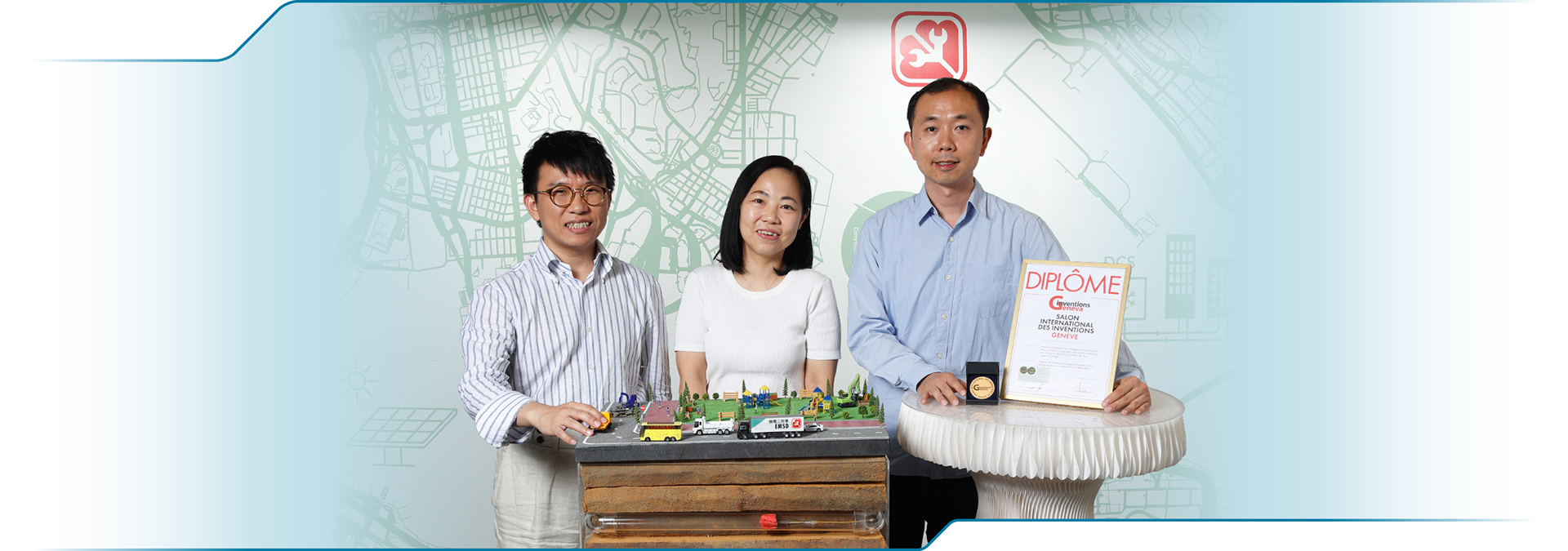
With only three weeks left to prepare for the International Exhibition of Inventions of Geneva, the Kai Tak District Cooling System (DCS) team learned that the display model had been accidentally damaged beyond repair. Facing the extreme deadline and logistical challenges, the team turned the situation around with perseverance and creativity, ultimately winning a gold medal with the congratulations of the jury.
As a pioneer in the innovative development of DCSs, the EMSD planned to participate in the International Exhibition of Inventions of Geneva with the project named Integration of AI and Optical Fiber Technology for District Cooling/Heating System Plants. However, three weeks before the departure, the team were informed by the contractor that the model had been severely damaged beyond repair in an accident. This unexpected blow plunged the team into an unprecedented crisis.
Senior Engineer Miss Ma Ching-wah, Midco, said, "Facing the tight deadline, our team did not lose heart. We immediately held a meeting to make a remedial plan and divided tasks among members. Each of us sourced and ordered the necessary materials, ensuring delivery within a week. At the same time, we actively searched for reusable samples and parts in our office for modification." By drawing on collective wisdom and tireless effort, the team managed to design and rebuild a brand-new model in less than two weeks.
Challenges did not end there. As the new model was being prepared for shipment, the contractor brought them more bad news. Engineer Mr Wong Kwun-ping recalled, "We handed over the new model by the contractor’s deadline for shipping, but the courier company informed us that it could not be delivered to Geneva in time. This completely disrupted our plan, and the situation was extremely worrying. "Facing this setback, the team did not give up and proactively contacted airlines to explore the possibility of transporting the model as a fragile item. The airlines responded that cargo space could only be confirmed one day before departure. The team anxiously awaited replies while looking for other shipping options.
On the eve of the departure, the team finally confirmed that the model could travel with them to Geneva direct. After a series of crises, the model arrived at the exhibition venue on time and was successfully presented to the jury. In the end, the team's innovative achievement was highly praised by the jury, winning the gold medal with the congratulations of the jury and highlighting their teamwork and adaptability. The Kai Tak DCS team has demonstrated unwavering perseverance and an indomitable spirit, proving that cohesion and determination are essential to every innovation journey.